

Understanding the Investment: What Influences Roof Extension Costs
The cost to extend roof structures varies dramatically. Here’s a quick overview of what you can expect:
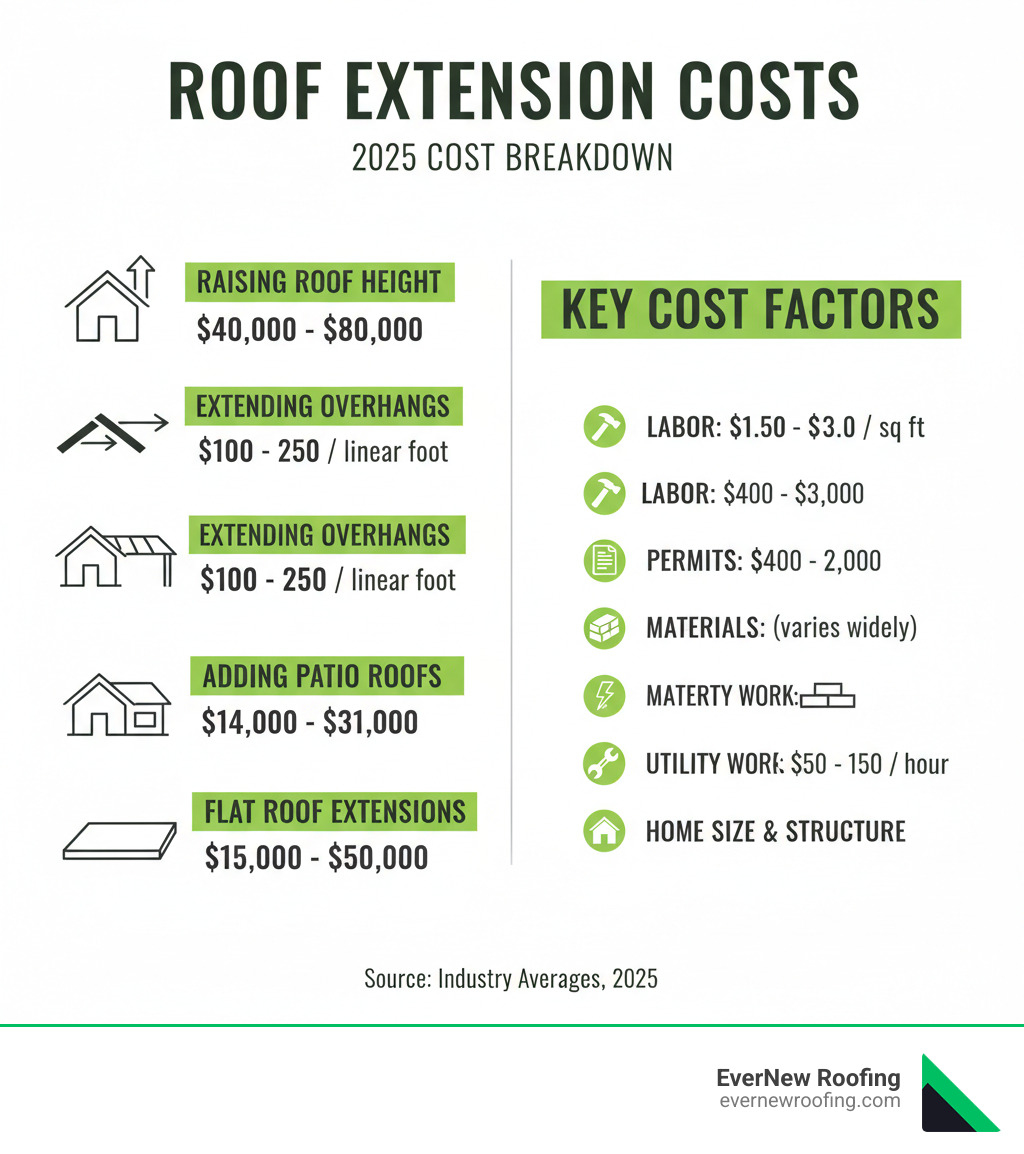
- Raising a roof (adding vertical space): $40,000 – $80,000 on average, with a full range of $15,000 to $130,000.
- Extending an overhang: $100 – $250+ per linear foot.
- Adding a patio roof: $14,000 – $31,000 on average.
- Flat roof extensions: $15,000 – $50,000.
Key cost factors include your home’s size, roof type, architectural complexity, labor rates ($1.50 – $3.00/sq ft), permits ($400 – $2,000), and utility work ($50 – $150/hour).
The term “roof extension” can mean raising your roof to add living space or extending its footprint to cover a patio. These are vastly different projects with different price tags. Most homeowners find these projects to be expensive and disruptive, often taking 4-6 weeks and requiring you to move out during construction.
Before you commit, ask yourself: Is your current roof in good enough condition to support this investment? Many homeowners spend tens of thousands on extensions only to find their aging roof needs replacement soon after—essentially paying twice.
I’m Jeffrey Goldman, and my work has taught me that understanding the full cost to extend roof structures—including hidden expenses and smarter alternatives—can save homeowners thousands of dollars and months of disruption.
In the sections that follow, we’ll break down what influences these costs and reveal a cost-effective alternative that many contractors won’t tell you about.
Understanding “Roof Extension”: Raising Height vs. Extending Footprint
When homeowners want to “extend their roof,” they usually mean one of two things: raising the roof’s height for more vertical space or extending its footprint horizontally. The cost to extend roof structures depends entirely on which project you’re planning, and the price difference is huge.
Understanding which category your project falls into is the first step toward getting accurate cost estimates. Let’s clarify the two main types of roof extensions.
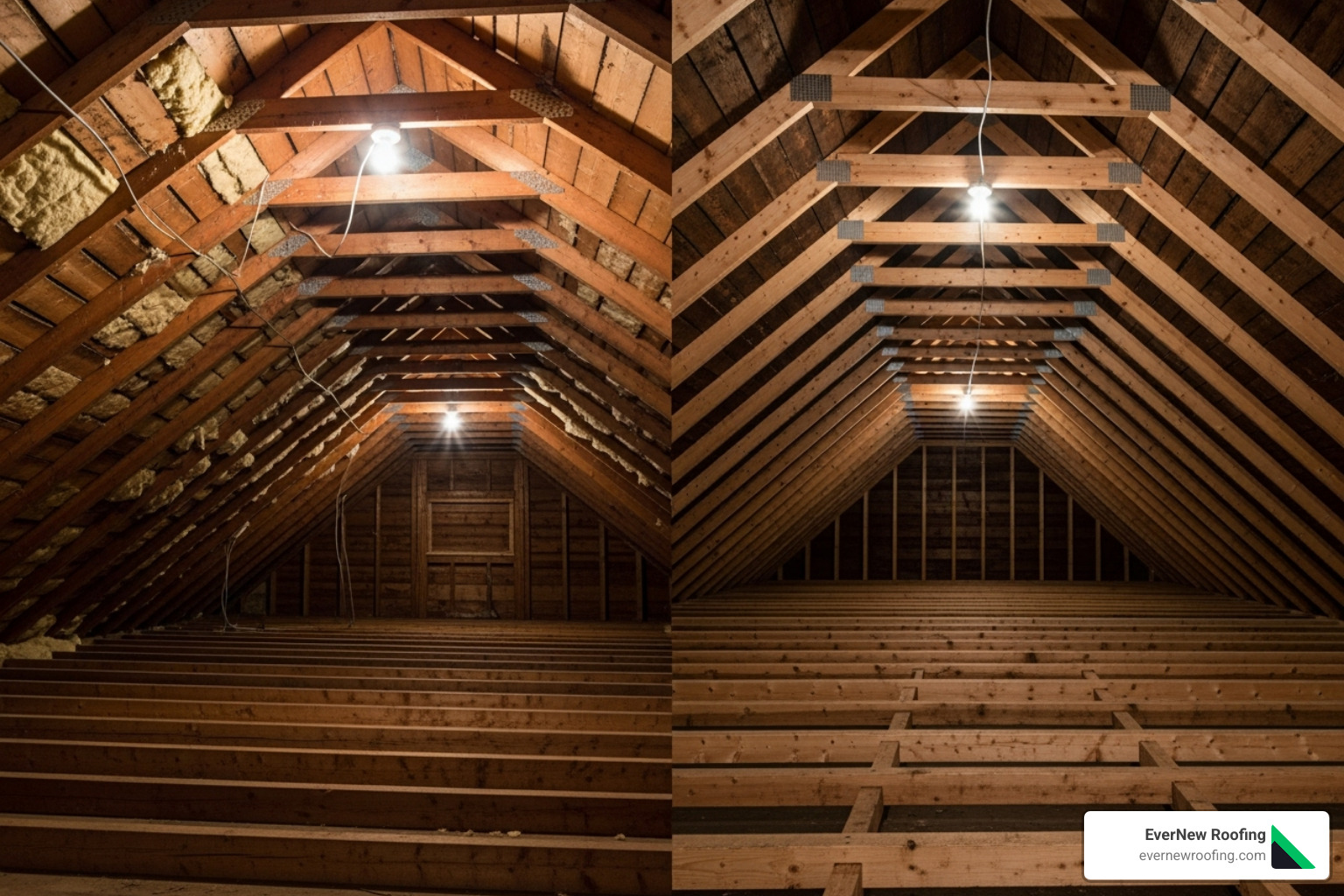
Your roof’s framing—stick-framed or truss-framed—will significantly impact the feasibility and cost of your project. Stick-framed roofs are generally more flexible for conversions, while trussed roofs require more extensive structural modifications.
Raising a Roof to Add Vertical Space
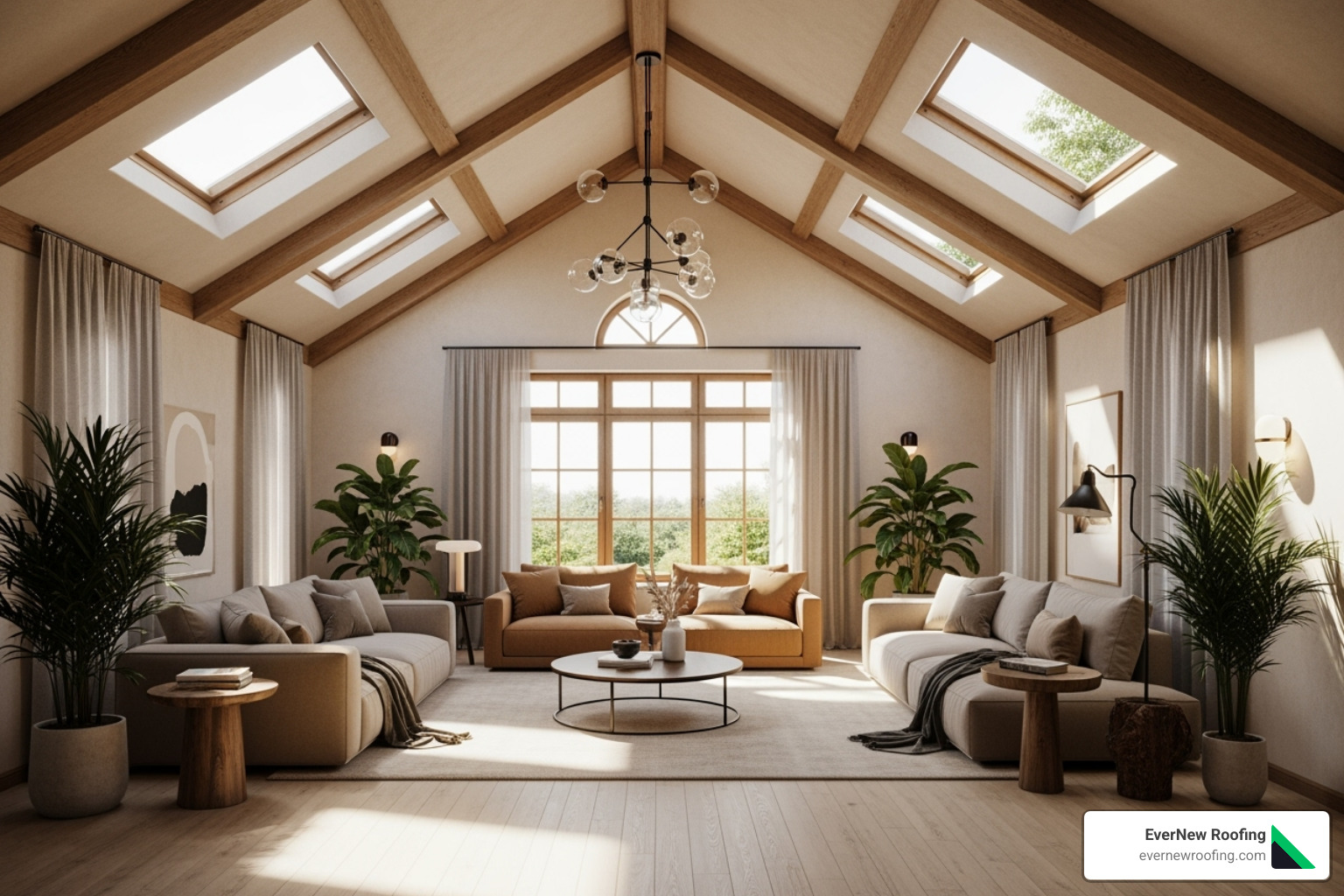
Raising a roof involves significant structural work to create more vertical space. This could mean creating vaulted ceilings, adding a second story, or converting an attic into a functional room like a master suite or home office.
The cost to extend roof height averages around $60,000, but this can vary widely. The project involves removing the existing roof, building new walls, and constructing a new roof at a higher elevation. The payoff is increased living area without needing a new home or a yard-consuming addition. For families who love their neighborhood but need more space, it can be a life-changing investment.
Extending a Roof’s Footprint
Not every roof extension needs to be a major structural lift. Extending a roof’s footprint outward is a simpler, lower-cost alternative. This typically means covering a patio, adding a roof over a deck, or extending an existing overhang.
A contractor-installed patio roof usually runs between $14,000 and $31,000, while extending an overhang costs around $100 to $250+ per linear foot. A covered patio creates a usable outdoor space in any weather, while extended overhangs are incredibly effective at protecting your siding from water damage, rot, and mold.
These extensions also improve water management by directing rain away from your foundation, preventing expensive repairs down the road. To learn how such improvements affect property value, see our guide on how roof replacement costs impact home value.
The True Cost to Extend Roof Structures
When planning to raise or extend your roof, you need to understand the financial commitment. The average cost to extend roof structures, particularly when raising them, is between $40,000 and $80,000, but complex projects can exceed $130,000. This range reflects your home’s unique structure, material choices, and local labor rates.
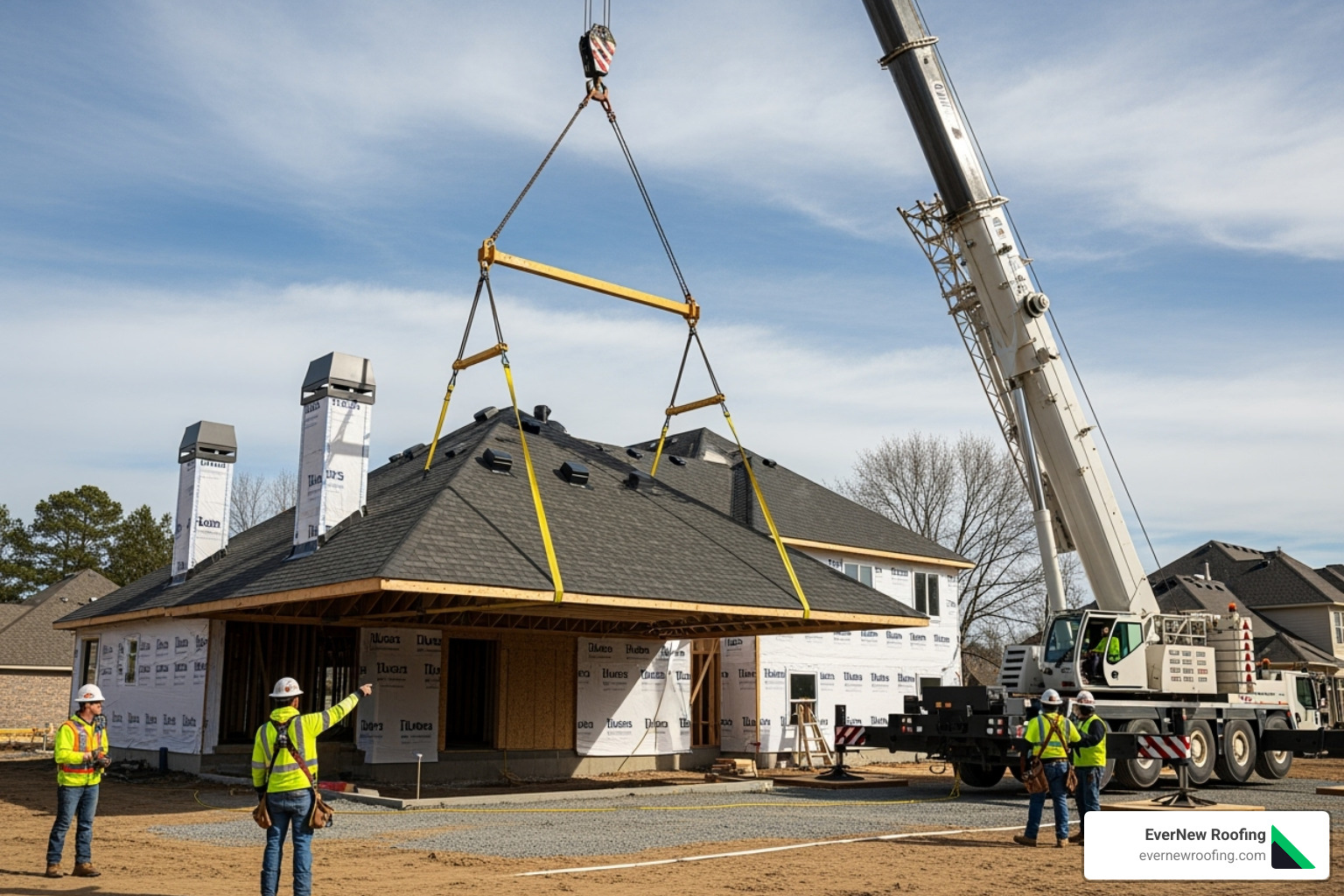
A roof extension involves multiple professionals. A general contractor typically charges 10% to 20% of the total project cost. A structural engineer is essential and bills from $70 to $250 per hour. An architect might add around $3,000 for custom design work.
On a per-square-foot basis, raising a roof to increase ceiling height typically runs $48 to $72. Increasing the roof pitch costs $60 to $86 per square foot. Doing both costs $74 to $98 per square foot. These figures cover demolition, framing, roofing, siding, and interior finishing.
Key Factors Influencing the Cost to Extend Roof Height
The final cost depends on several critical factors:
- Home Size: A larger home requires more materials and labor, increasing the cost.
- Architectural Style: Simple rooflines on ranch-style homes are less expensive to modify than complex roofs on Victorian or Cape Cod homes.
- Roof Frame Type: Older, stick-framed roofs are easier and cheaper to modify. Newer, trussed roofs are prefabricated and difficult to alter, often requiring an engineer’s approval and adding $5,000 to $10,000 to the project for structural changes.
- Roof Pitch: Low-slope roofs are cheaper to work on. High-slope roofs require special safety equipment and more labor, increasing costs.
- Material Choices: Basic asphalt shingles are economical, while metal, slate, or tile are more expensive. Siding and other exterior finishing materials also add to the budget.
- Labor Costs: Professional roofing labor typically runs $1.50 to $3.00 per square foot, not including the general contractor’s fee or other specialized trades.
Comparing the Cost to Extend Roof Types: Flat vs. Pitched
Pitched roofs are complex due to their slopes and angles, making them more expensive to raise or alter. Changing the pitch of an entire roof can cost $10,000 to $25,000. For more on general costs, see our Comprehensive Roof Replacement Guide: Timing, Costs, More.
Flat roofs can sometimes be less expensive to raise, with costs typically falling between $15,000 and $50,000. Their simpler geometry requires less complicated framing, but they still need significant engineering to design new support systems that meet building codes for drainage and load-bearing capacity.
Hidden Costs: Permits, Utilities, and Finishing
Several “hidden” expenses can inflate your budget. Be sure to account for:
- Building Permits: Mandatory for structural changes, costing $400 to $2,000. Your contractor should handle the permits as part of the construction process.
- Utilities: Electrical, plumbing, and HVAC lines often need to be rerouted or extended by licensed professionals, who charge $50 to $250 per hour.
- Chimney Modifications: If you have a chimney, it will likely need to be modified to fit the new roofline, costing $500 to $6,000.
- Debris Removal: Demolition creates waste, and cleanup can cost $30 to $50 per hour, plus hauling fees.
- Exterior Refinishing: New siding, paint, and trim are needed to match your existing home, adding to the final cost.
Smart Alternatives to a Full Roof Raise
Raising your roof is a massive undertaking. The cost to extend roof height is significant, and the project involves weeks of disruption. Before committing, it’s wise to explore alternatives that might achieve your goals without the enormous expense and hassle.
Let’s compare a full roof raise to a simpler, highly effective approach like roof rejuvenation:
| Feature | Roof Raise | Roof Rejuvenation |
|---|---|---|
| Cost | $40,000 – $80,000 (average) | Up to 80% less than full roof replacement |
| Timeline | 4-6 weeks (average) | Typically 1-2 days |
| ROI | 47%-53% | Extends roof life by up to 15 years, delaying costly replacement |
| Disruption | High (often requires temporary relocation) | Minimal (no need to leave home) |
| Primary Goal | Add living space, increase ceiling height | Extend existing roof lifespan, improve performance |
| Complexity | Extremely high (structural engineering) | Low (specialized application) |
The difference is striking. While a roof raise is right for some, exploring these alternatives first is a smart move.
Enhancing Ceilings Without Raising the Roof
You can create a more spacious feel without touching your roofline. If your home has an unused attic, vaulted ceilings can open up a room vertically. By removing ceiling joists and exposing the rafters, you create an airy, cathedral-like feeling. This is less extensive and costly than raising the entire roof.
Tray ceilings (a raised central section) and coffered ceilings (a grid of sunken panels) also add architectural interest and create the perception of height and depth. These interior-only renovations are far less complex and expensive than a full roof raise.
A Smarter First Step: Is Roof Rejuvenation a Better Option?
Before planning a major extension, consider your existing roof’s condition. Investing $40,000 to $80,000 in a roof raise is pointless if the underlying shingles are failing. You don’t want to pay for an extension and then a roof replacement a few years later.
This is where roof rejuvenation is often the smartest first step. At EverNew Roofing, we specialize in extending the life of asphalt shingles. Over time, shingles dry out and become brittle. Our rejuvenation process restores their flexibility and waterproofing, extending their lifespan by up to 15 years.
The cost is up to 80% less than a full replacement, and the process takes just 1-2 days with minimal disruption. By rejuvenating your roof first, you ensure your entire roof system is in prime condition before adding new construction. You delay the need for a costly replacement and give yourself breathing room to save for that extension. Learn more by reading What is Roof Rejuvenation and Why Your Roof Needs It.
For a financial breakdown, see The Cost of Roof Rejuvenation vs. Roof Replacement: Which Is Right For You?. Sometimes the smartest decision is the one that protects your investment and saves you money.
Weighing the Pros and Cons: Is a Roof Extension Worth It?
Deciding on a roof extension is a major commitment. The cost to extend roof structures is substantial, but for many homeowners, the payoff is worth it. You’re not just paying for construction; you’re investing in your family’s comfort and your home’s value.
It’s crucial to look at both the exciting possibilities and the real-world complications. Your decision should align with your long-term goals.
The Benefits and Return on Investment (ROI)
The benefits of a roof raise can be transformative:
- Increased Living Space: Convert a dusty attic into a master suite, home office, or playroom.
- Higher Ceilings: Vaulted ceilings make existing spaces feel larger, brighter, and more luxurious.
- More Storage: A raised roof creates accessible storage space that is far more functional.
- Improved Aesthetics: A well-executed roof raise can dramatically improve your home’s curb appeal.
Financially, the return on investment typically ranges from 47% to 53%. While you may not recoup the full cost upon sale, you are adding real, usable square footage. In competitive markets, an extra bedroom or bathroom can be a significant selling point and increase your home’s market value.
Project Timeline, Risks, and Why DIY is Not an Option
Be prepared for the realities of a major construction project. The timeline is typically four to six weeks, and delays are possible. During this time, expect noise, dust, and disruption. Many families choose to relocate temporarily.
There are significant risks involved:
- Structural Integrity: Your roof is integral to your home’s structure. Mistakes can lead to sagging walls or foundation cracks.
- Water Damage: With your roof open, your home is vulnerable to the elements. A sudden storm can cause extensive damage.
This is not a DIY project. The risks are too high. Approximately 20% of construction industry deaths are from falls off roofs, and those are trained professionals. Attempting this yourself can void your home insurance, create costly structural problems, and endanger your family.
This is a job where you must Find Local Pros who are licensed, insured, and experienced. The upfront cost is higher, but it’s the only way to ensure your family’s safety and your home’s integrity.
Frequently Asked Questions About Roof Extensions
Here are answers to some of the most common questions homeowners have about roof extensions.
How can I save money on a roof extension project?
While the cost to extend roof structures is high, you can manage expenses without compromising quality:
- Get Multiple Quotes: Obtain detailed estimates from at least three licensed general contractors to compare costs and scope.
- Keep it Simple: A straightforward design is more budget-friendly than a complex roofline with custom features.
- Time it Right: Scheduling your project during a contractor’s off-season (late fall or winter) may lead to more competitive pricing.
- Phase the Project: Complete the structural shell first, then finish the interior in stages as your budget allows.
- Check Your Current Roof: Ensure your existing roof is healthy first. A simple rejuvenation can prevent the much higher cost of a premature replacement.
How much value does raising a roof add?
A roof raise won’t pay for itself entirely at resale. The ROI typically falls between 47% and 53%, meaning you’ll recoup about half of your investment in increased home value.
However, the true value isn’t just financial. You’re gaining usable square footage that improves your daily life. An extra bedroom or a home office has tangible value. Aesthetically, higher ceilings and improved curb appeal make your home more attractive to buyers. The exact value added depends on your local real estate market, so consult a local agent.
When is it better to move than to raise a roof?
Sometimes, moving is the smarter choice. Consider moving if:
- The Cost is Too High: If the renovation cost exceeds the value it adds compared to similar homes in your neighborhood, you risk over-improving.
- The Disruption is Unmanageable: A 4-6 week construction project can be stressful. If you have young children, work from home, or cannot handle the disruption, moving might be better for your quality of life.
- You’re Unhappy with Your Location: If you’re already considering a new neighborhood or school district, a major renovation won’t solve those issues.
- Your Long-Term Plans Don’t Fit: If your family is growing or shrinking, it may be more practical to find a home that fits your future needs rather than adapting your current one.
If you love your location and the costs are reasonable for your market, raising your roof can be an excellent way to create your dream home.
Conclusion: Making the Right Choice for Your Roof and Budget
It’s clear that the cost to extend roof structures is a major financial decision. With projects ranging from $15,000 to over $130,000, this is not an investment to be taken lightly. These complex renovations require careful planning and skilled professionals.
But before you commit to a massive, disruptive project, ask a fundamental question: Is your current roof ready for this investment?
Spending tens of thousands on an extension only to find your aging roof needs replacement shortly after is a costly and preventable mistake. You end up paying twice.
For many homeowners, improving the longevity of the current roof is the most cost-effective first step. At EverNew Roofing, we specialize in roof rejuvenation, a service that can extend the life of your asphalt shingles by up to 15 years. It saves you up to 80% compared to a full replacement and restores your shingles’ flexibility and waterproofing.
By starting with a healthy, refreshd roof, you protect your larger investment for years to come. You ensure that the new space you’re creating is built on a sound, secure, and lasting foundation.
Whether a full extension is right for you or a simpler alternative makes more sense, the smartest approach begins with an honest assessment of your roof’s current health.
Discover how affordable roof rejuvenation can be and let us help you make the right choice for your home and your budget. We’re here to ensure you’re building on a foundation that will serve you well for years to come.

