


When Disaster Strikes: Recognizing a Roofing Emergency
Emergency roof damage repair is critical when your roof suffers sudden, severe damage that threatens your home’s safety and structure. Here’s what constitutes an emergency:
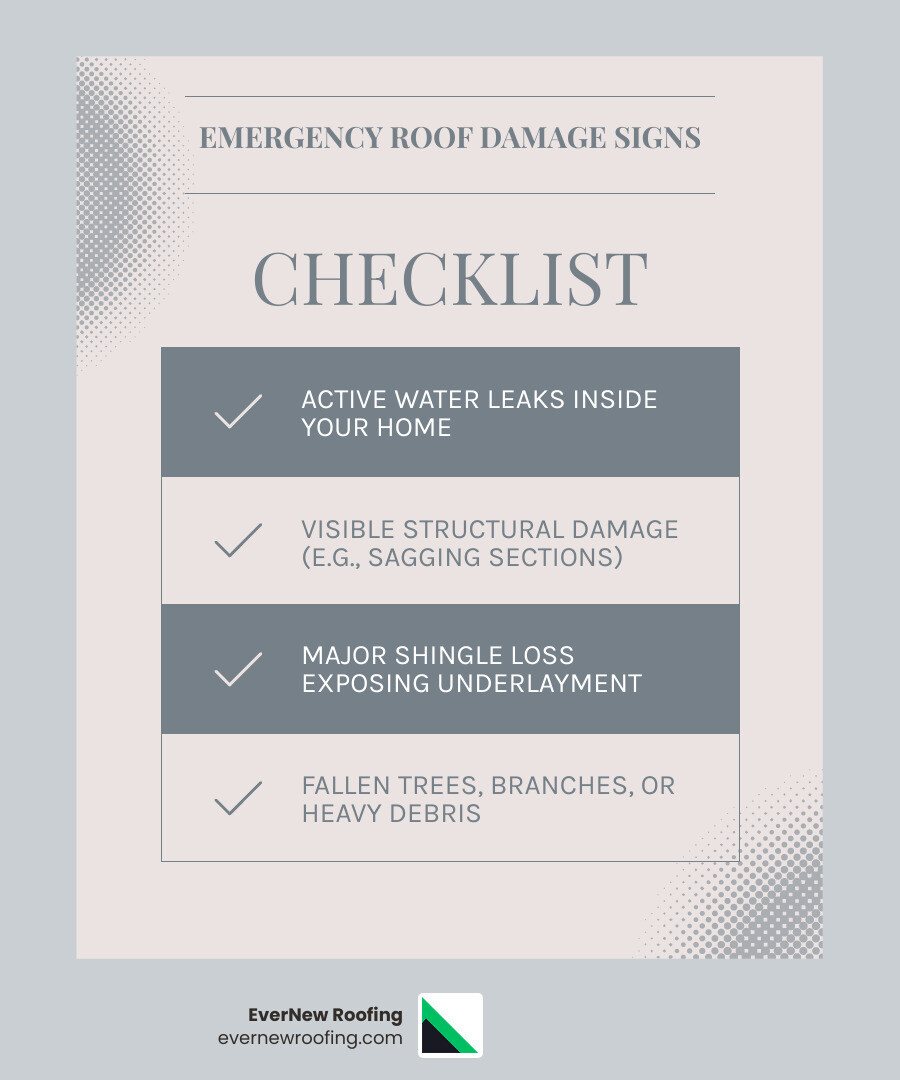
Immediate Signs You Need Emergency Roof Damage Repair:
- Active water intrusion – Water actively pouring or dripping into your home.
- Visible structural damage – A sagging roof, exposed decking, or visible holes.
- Major shingle loss – Large sections of shingles are missing, exposing the underlayment.
- Fallen debris – Trees or large branches have punctured or are sitting on your roof.
- Fire or lightning damage – Obvious burn marks, holes, or a compromised roof structure.
What causes most roofing emergencies? Storms are the biggest culprit, responsible for 60% of all roof emergencies through high winds, hail, and falling trees. Other common causes include ice dams, age-related failures, and sudden structural issues.
Roof emergencies don’t wait for convenient times. Once water gets inside, damage spreads quickly from the roof deck to insulation, drywall, and electrical systems. Acting fast in the first hour can mean the difference between a manageable repair and a costly disaster.
I’m Jeffrey Goldman. Through extensive research and collaboration with roofing professionals, I’ve learned that knowing what to do in the critical first moments of a roofing emergency can save homeowners thousands of dollars. This guide will help you protect your most valuable asset.
Your First Hour Action Plan: Safety, Containment, and Documentation
When your roof is damaged, the first hour is critical. Focusing on three priorities—safety, containment, and documentation—can protect your family and minimize damage to your home.
Prioritize Safety Above All Else
Before anything else in an emergency roof damage repair situation, assess the danger. Is there standing water near electrical outlets? Are there downed power lines outside? Is part of the ceiling sagging?
As roofing experts advise, you must assess danger immediately. If there’s a risk of collapse or flooding, evacuate your family and pets. Avoid downed power lines and call 911 if needed.
If you notice visible sagging in the ceiling, hear creaking noises, or see water pooling near electrical fixtures, get everyone out. You can return once a professional declares it’s safe. No repair is worth risking an injury.
Minimize Interior Damage
Once it’s safe, your next job is to stop water from causing further damage. Water can travel along beams, appearing far from the actual leak.
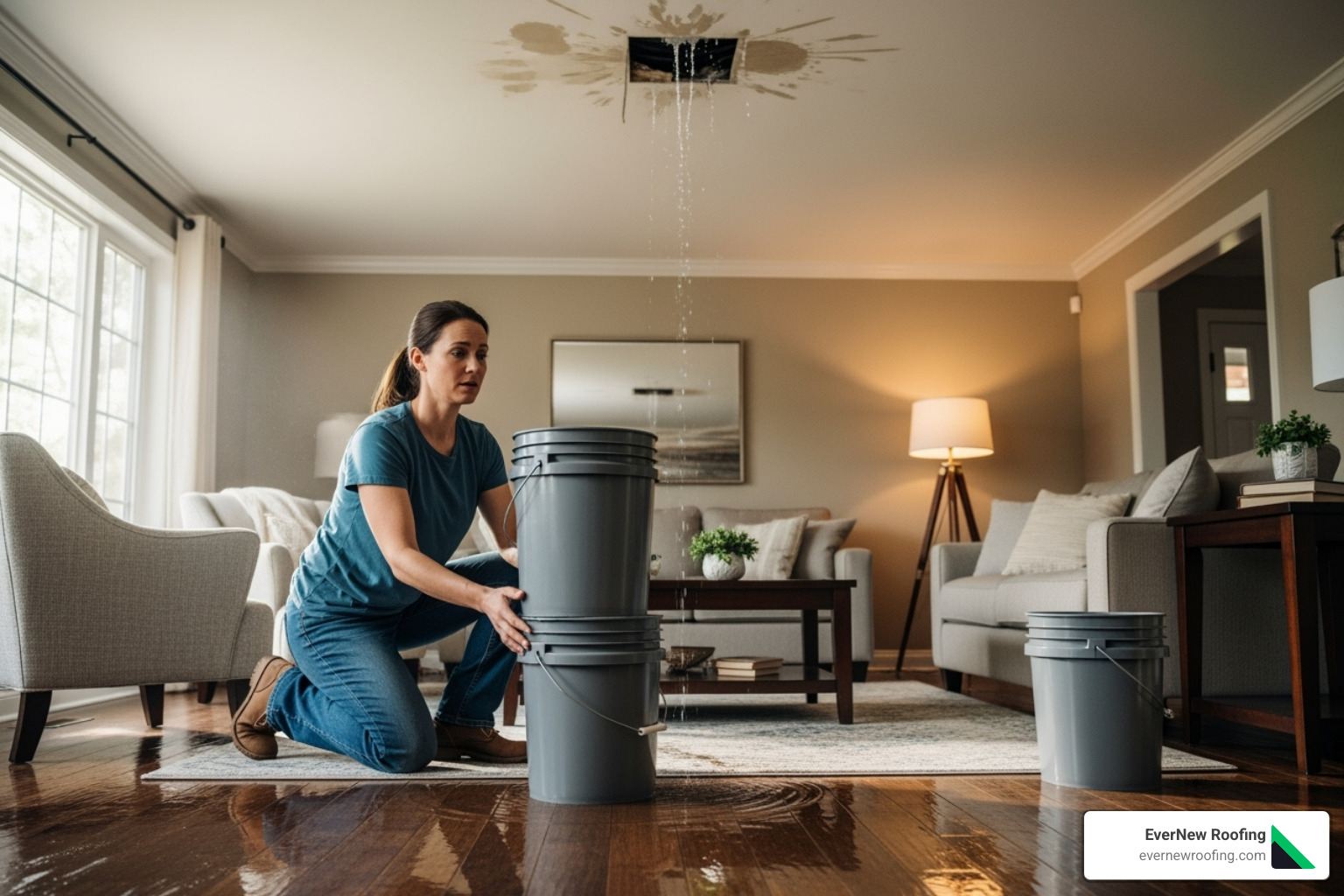
- Catch drips: Place buckets, pots, and pans under active leaks. If a ceiling is bulging with water, carefully poke a small hole to let it drain into a bucket. This prevents a larger collapse.
- Protect valuables: Move furniture, electronics, and other items away from wet areas. Cover anything you can’t move with plastic sheeting or garbage bags.
- Shut off power: If water is near outlets or light fixtures, go to the breaker box and shut off power to those circuits to prevent electrical hazards.
- Start drying: Running fans and a dehumidifier helps dry the area and prevent mold growth while you wait for professional help.
Document Everything for Insurance
This step is crucial for a smooth insurance claim. The more you document now, the easier it will be later.
- Take photos and videos: Use your phone to capture everything—the damaged roof, ceiling stains, buckets catching water, and soaked belongings. Get close-ups and wide shots. Your phone automatically date-stamps them, which is helpful for insurance.
- Write it down: Note the time you noticed the damage, the weather conditions, and where water is entering. List the emergency steps you took.
- Keep receipts: Save all receipts for supplies like tarps, buckets, or plastic sheeting. These costs are often reimbursable.
Organize this documentation in a single folder. Taking these steps turns panic into purposeful action. If you need professional help fast, you can Find Trusted Roofing Services Near Me for Your Home Repairs to guide you through what comes next.
To DIY or Not to DIY? Temporary Fixes vs. Calling a Professional
When your roof is damaged, you face a critical decision: handle it yourself or call a professional? While some temporary fixes can prevent further damage, recognize when emergency roof damage repair requires an expert.
How to Temporarily Mitigate Damage Yourself
You can take immediate action to protect your home, but safety must always come first.
Safety Precautions for DIY
Never attempt roof work during a storm, in high winds, or when the surface is wet or icy. A fall from a roof can be catastrophic. Always have a spotter on the ground. If you have a safety harness, use it. If you feel at all hesitant about safely accessing the roof, call a professional.
Tarping a Roof
Tarping is the most effective temporary fix for large damaged areas. While professional tarping services average $450, you can do it yourself if you are confident and capable.
You’ll need a heavy-duty, UV-resistant tarp, 2×4 lumber boards (battens), plastic cap nails or screws with washers, and a hammer or screw gun.
To tarp a roof, clear debris from the damaged area. Unfold the tarp to cover the damage, extending it at least three feet on all sides and over the roof’s ridge if possible. Anchor the top edge by wrapping it around a batten and screwing the board into the roof deck. Pull the tarp taut and secure the remaining edges with cap nails or screws. This temporary fix can last 30-60 days, buying you time for a professional repair.
Other Fixes
For minor issues, a few DIY temporary fixes can help. Roofing cement can seal small cracks or holes on a dry surface. For a single lost shingle, you can slide a spare underneath and secure it with roofing cement and nails.
Avoid actions that can cause more damage, like spraying foam around vents, driving nails randomly into shingles, or placing sandbags directly on the roof.
When to Call for Professional Emergency Roof Damage Repair
However, some situations require a professional. Calling for emergency roof damage repair is crucial for your safety and your home’s integrity in the following cases:
- Significant structural damage: A sagging or buckling roof deck requires immediate professional assessment.
- Large or multiple active leaks: If you can’t contain the water, you need professional help.
- Unsafe roof access: If your roof is too steep, high, or slippery, let trained professionals with proper safety gear handle it.
- Damage near electrical lines: This is an absolute no-go for DIY. Shut off the power and call for help.
- Complex roof types: Tile, metal, or membrane roofs require specialized knowledge, even for temporary repairs.
- Extensive damage: If you can see daylight through your roof deck or more than 25% of your shingles are missing, the situation is serious.
- If you’re unsure: It’s always better to err on the side of caution. A professional can assess the situation, perform safe temporary repairs, and plan a permanent solution.
When you’re facing any of these situations, it’s time to Fix Your Roof with professional help.
Navigating Professional Emergency Roof Damage Repair and Insurance
Once you decide you need professional help, the next phase involves working with roofing experts and your insurance company. Understanding the process can make it much more manageable.
What to Expect from a Professional Roofing Service
A professional emergency roof damage repair service understands the urgency of protecting your home. Here’s what to expect:
- 24/7 Availability: True emergency services operate around the clock and can dispatch a team quickly, often within hours.
- Thorough Inspection: Upon arrival, the crew will conduct a thorough inspection, sometimes using drones for safety. They look for both obvious and hidden damage.
- Temporary Stabilization: Their immediate priority is to stop active leaks with tarps or patches to prevent further damage.
- Detailed Estimate: After securing your home, they will provide a clear, itemized estimate for permanent repairs, outlining the work, materials, and timeline.
- Insurance Assistance: A good roofing company can help with your insurance claim. They provide detailed reports, meet with adjusters, and advocate for you to ensure all damage is covered.
Important questions to ask your roofer: How quickly can you respond? Will you tarp the roof tonight? What warranty do you offer? Can you help with insurance documentation? Are your technicians licensed and insured?
For more on choosing the right partner, explore Important Aspects of Emergency Roofing Repair Companies.
How to Handle an Emergency Roof Damage Repair Insurance Claim
Dealing with insurance after a disaster can be stressful, but a methodical approach makes it manageable.
- Notify Your Insurer Promptly: Contact your insurance company within 24-48 hours. Delaying can give them grounds to deny or reduce your claim. Stick to the facts of what happened.
- Provide Documentation: Share your time-stamped photos, videos, notes, and the roofer’s report with your insurer. Thorough documentation is your best evidence.
- Understand Your Policy: Know your deductible (what you pay out-of-pocket). Also, determine if you have an Actual Cash Value (ACV) policy, which pays the depreciated value of your old roof, or a Replacement Cost Value (RCV) policy, which pays to replace it with new materials. RCV offers better coverage.
- Meet the Adjuster with Your Roofer: If possible, have your contractor present during the adjuster’s inspection. Your roofer can point out damage the adjuster might miss and advocate for necessary repairs.
What to avoid: Don’t discard damaged materials before the adjuster sees them. Don’t sign documents you don’t understand. Be wary of any contractor who offers to “waive” your deductible, as this is insurance fraud.
Most homeowner’s policies cover emergency roof damage repair from sudden events like storms or falling trees, but not damage from neglect. For more guidance, the Canadian government offers helpful resources on filing an insurance claim after a disaster.
The Financial Case for Proactive Maintenance
The best financial strategy for your roof isn’t just reacting to emergencies, but preventing them. Proactive maintenance is a smart investment that saves you money and stress.
The High Cost of Emergencies vs. The Savings of Prevention
The numbers tell a compelling story. Emergency roof damage repair costs more than planned maintenance. You pay premium rates for urgency, after-hours service (often 20-30% more), and materials during high demand.
The Federal Alliance for Safe Homes found that fixing emergencies early saves 30-50% on costs, but prevention saves even more.
| Cost Comparison | Emergency Repair (Average) | Regular Maintenance (Annual) | Savings Over 10 Years |
|---|---|---|---|
| Initial Cost | $2,500 – $5,000+ | $200 | |
| Potential Damage | Interior, structural, mold | Minimal | |
| Long-term Savings | (More frequent repairs) | $4,500 |
A 2023 study by the National Association of Home Builders revealed that roofs with routine inspections saved homeowners an average of $4,500 over 10 years. An annual investment of around $200 in maintenance can prevent thousands in emergency costs. Taking steps to prevent costly roof repairs can cut emergency expenses by up to 60%. To see what proactive care might cost, Get an Instant Quote for your roof.
How Regular Maintenance Prevents Disasters
Regular maintenance consists of straightforward tasks that can add 12+ years to a roof’s lifespan, helping you avoid a premature replacement and emergency calls.
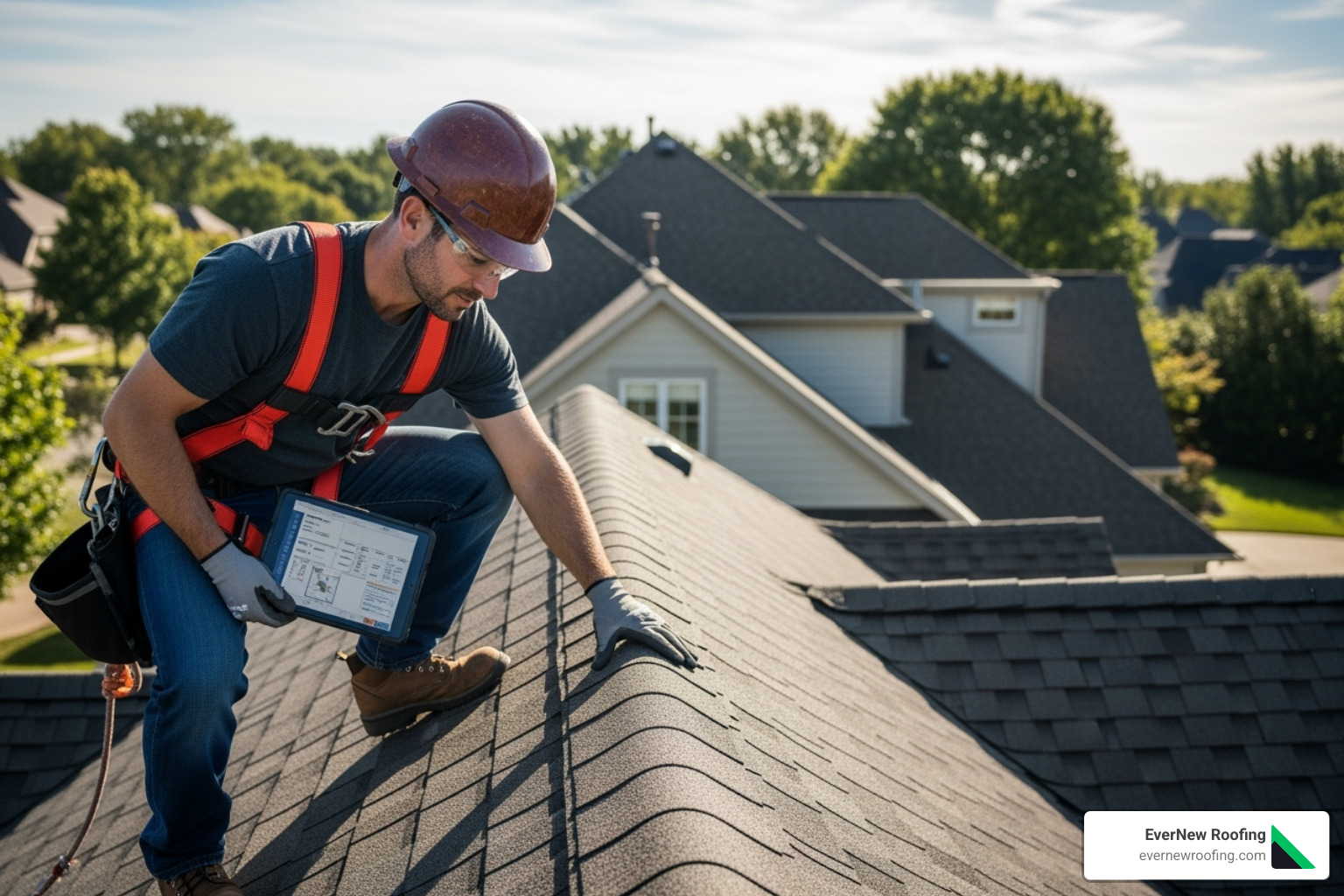
Key preventative tasks include:
- Biannual Inspections: Examine your roof in the spring and fall to catch wear, loose shingles, or debris before they become major issues. A professional inspection can spot subtle problems you might miss.
- Gutter Cleaning: Clogged gutters cause water to back up under shingles, leading to leaks and ice dams. Clean them regularly, especially in the fall.
- Tree Trimming: Trim branches back at least 6 to 10 feet from your roof to prevent punctures and debris accumulation during storms.
- Flashing Checks: Annually check the seals around chimneys, vents, and skylights for cracks or deterioration, as these are common leak points.
- Prompt Minor Repairs: Fix small issues like a single missing shingle immediately. This prevents water intrusion that leads to situations requiring emergency roof damage repair.
For a deeper dive into what professional inspections cover, see our guide on Roofing Inspection: Why It’s Essential and What Homeowners Should Expect. The best emergency is the one that never happens.
Frequently Asked Questions about Emergency Roof Repair
Roofing emergencies are stressful, and you need clear answers fast. Here are the most common questions we receive about emergency roof repair.
What constitutes a true roofing emergency?
A true roofing emergency is any sudden, severe damage that threatens your home’s safety and allows water inside. It’s anything that can’t wait for normal business hours without causing serious harm. This includes:
- Active water leaks pouring or dripping into your home.
- Visible holes, punctures, or structural damage like a sagging roof.
- Large sections of missing shingles that expose the underlying roof structure.
- Damage from a fire, lightning, or a fallen tree.
If you see water actively entering your home or significant damage that exposes its interior, it’s an emergency. When in doubt, call a professional for an assessment.
How much does emergency roof repair cost?
The cost of emergency roof damage repair varies based on several factors: the extent of the damage, your roof type, the timing of the call (after-hours services cost more), and your location. For a general idea:
- Temporary Tarping: Averages $450 to stop immediate leaks.
- Minor Emergency Repairs: Typically run from $500 to $2,000.
- Major Storm Damage: Can cost $2,500 to $5,000 or more, especially with structural damage.
These are general ranges. A professional assessment is required for an accurate estimate for your specific situation.
Can I do a temporary roof repair myself?
Yes, you can handle some minor temporary repairs, but only if you can do so safely. For a small area of missing shingles on an accessible, low-slope roof, you might be able to install a tarp to keep water out. Small cracks can sometimes be sealed with roofing cement.
However, DIY is not the answer in many situations. Never climb onto a roof that is steep, high, wet, or in windy conditions. If the damage is extensive, involves structural issues like sagging, or is near electrical lines, you need a professional immediately. The same applies to complex roof types like tile or metal.
If you feel unsafe or unsure, calling a professional emergency roof damage repair service is the smartest and safest choice. They have the training and equipment to handle dangerous situations correctly.
Conclusion: Protect Your Home and Your Peace of Mind
A sudden roof leak or storm damage is stressful, but you can be prepared. The key to handling a roofing emergency is to act fast, stay safe, and know when to call for help. Taking immediate steps to contain water and document damage can save you thousands, while recognizing your limits and calling a professional keeps you safe.
Partnering with a reputable roofer also simplifies the insurance process, as they can advocate on your behalf to ensure you get the coverage you deserve.
However, the best emergency is the one that never happens. Regular maintenance is the smartest investment you can make in your home. For a small annual cost, you can add 12+ years to your roof’s life and save an average of $4,500 over a decade, avoiding the stress and expense of emergency repairs.
At EverNew Roofing, we specialize in proactive solutions. Our roof rejuvenation service strengthens your existing asphalt shingles, saving you up to 80% compared to a full replacement. By investing in prevention, you avoid the stress and cost of crisis management and gain peace of mind knowing your home is protected.
Whether you’re facing an emergency or planning for the future, we’re here to help. Learn more about our roof rejuvenation services to protect your home and see how prevention today can save you from a crisis tomorrow. Your roof is the shield that keeps your family safe and dry.