


Understanding What You’ll Pay for an 1800 Sq Ft Roof Replacement
The 1800 sq ft roof replacement cost is one of the biggest investments you’ll make as a homeowner, and understanding what drives that price is essential before you sign any contracts.
Quick Answer: National Average Costs for 1800 Sq Ft Homes
- Average Total Cost: $9,199
- Cost Range: $7,071 – $23,417
- One-Story Home (~2,231 sq ft roof area): $9,958 – $32,978
- Two-Story Home (~1,153 sq ft roof area): $5,146 – $17,044
- Cost by Material:
- Asphalt Shingles: $7,071
- Metal Roofing: $13,879
- Wood Shingles: $17,243
- Clay Tiles: $23,301
- Slate: $23,417
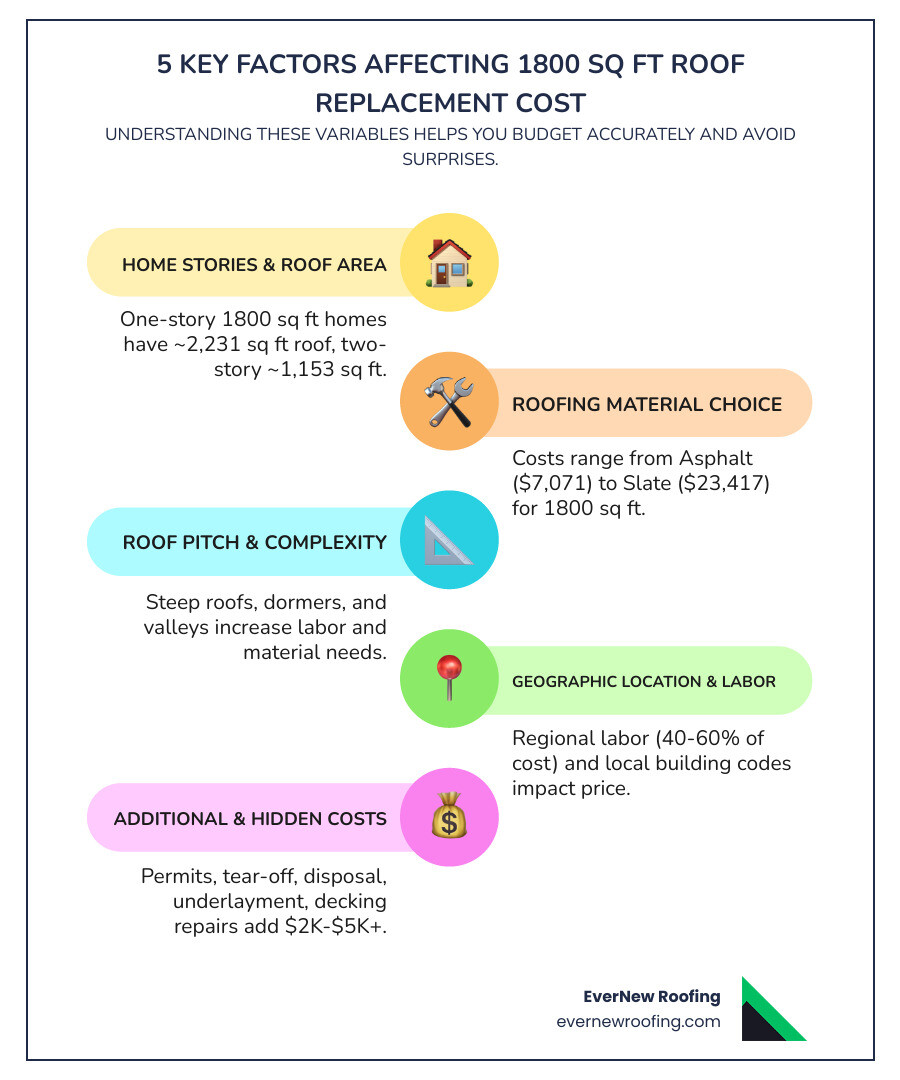
Your actual cost depends on several major factors: the number of stories in your home, your chosen roofing material, your roof’s pitch and complexity, your geographic location, and the condition of your existing roof structure. The difference between a one-story and two-story home of the same square footage is significant—a one-story 1800 sq ft home actually has roughly 2,231 square feet of roof, while a two-story home typically has about half that amount at 1,153 square feet.
Labor typically accounts for 40-60% of your total project cost, with regional variations in pricing adding another layer of complexity to your estimate. Additional expenses like permits, tear-off and disposal of old materials, underlayment replacement, and potential decking repairs can add $2,000-$5,000 or more to your base estimate.
I’m Jeffrey Goldman, and while my primary expertise lies in business development and health and wellness, I’ve researched and analyzed the 1800 sq ft roof replacement cost extensively to help homeowners like you make informed decisions about this major investment. Understanding these costs upfront helps you budget accurately and avoid surprise expenses during your project.
Breaking Down the Average 1800 Sq Ft Roof Replacement Cost
Let’s get real about what you’re actually going to spend. When you’re planning for an 1800 sq ft roof replacement cost, the national average sits around $9,199, though you might see prices anywhere from $7,071 to $23,417 depending on your specific situation.
Here’s something that catches a lot of homeowners off guard: your roof’s square footage is almost always bigger than your home’s square footage. Think about it—your roof has to cover overhangs, account for pitch, and stretch over architectural features. The average cost per square foot typically ranges from $4 to $11, but that’s calculated based on your actual roof area, not your living space.
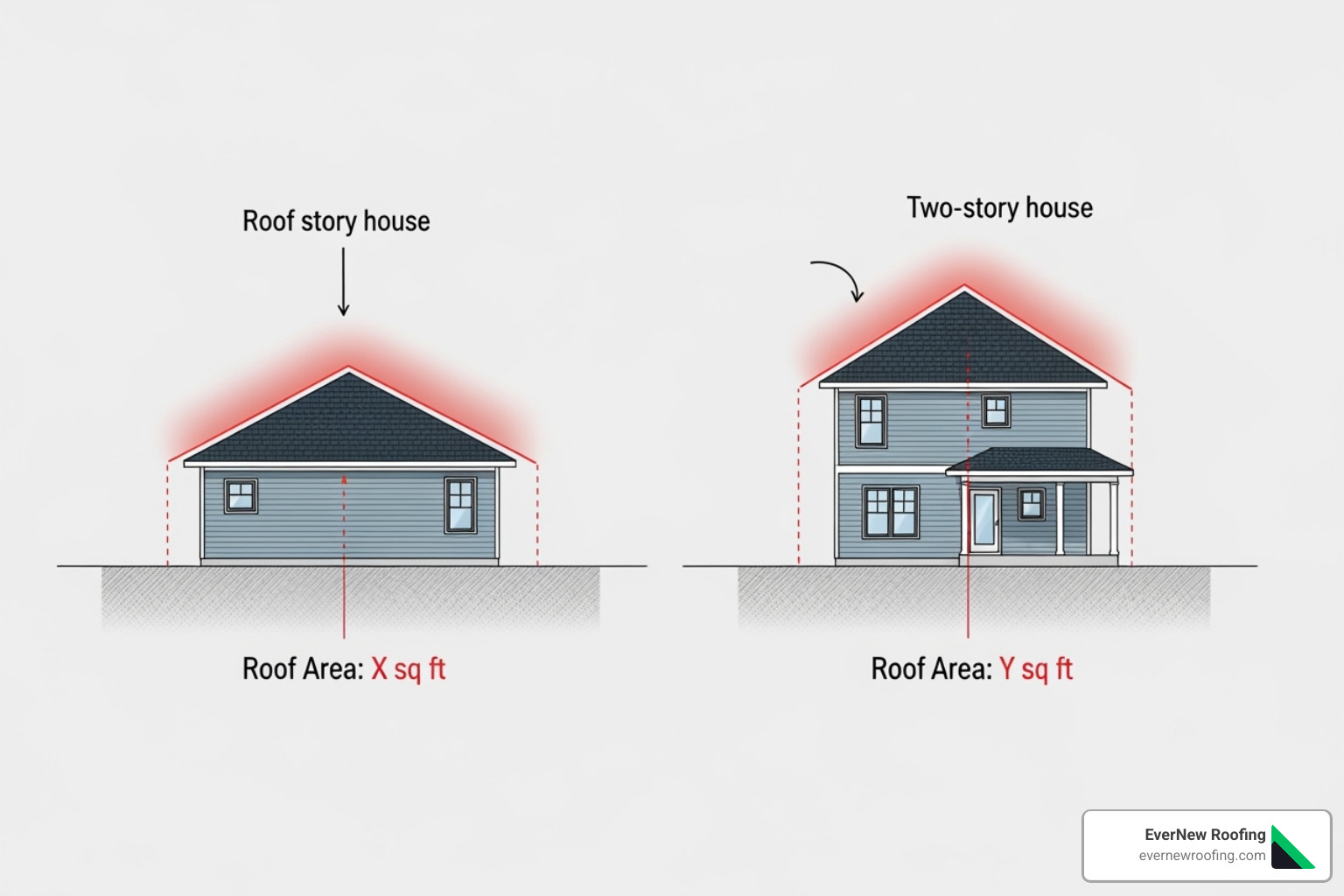
The difference between roof size and home size matters more than you might think. A one-story home sees about a 120% increase in roof area compared to living space, while a two-story home sees around a 60% increase. This is why understanding your actual roof dimensions is crucial for getting accurate estimates. For a deeper dive into the process, you can find more info about the replacement process.
Calculating the Base 1800 sq ft roof replacement cost
The number of stories in your home makes a dramatic difference in your final bill. If you have a one-story 1800 sq ft home, you’re actually looking at roughly 2,231 square feet of roof surface. That larger area means more materials, more labor hours, and a higher price tag—typically between $9,958 and $32,978, averaging around $12,995.
Now flip that around. A two-story 1800 sq ft home has about half the roof footprint at approximately 1,153 square feet. Your costs drop accordingly, ranging from $5,146 to $17,044, with an average around $6,695. Same living space, dramatically different roof replacement costs.
To put it in perspective, each additional 100 square feet of living space adds about $674 to your roof replacement cost in a one-story home, compared to just $366 per 100 square feet in a two-story home. That’s nearly double the cost increase for single-story layouts.
Labor vs. Material Cost Breakdown
When contractors break down your quote, you’ll notice that labor typically accounts for 40-60% of your total cost, with materials making up the remaining 40-60%. It’s rarely an even split, and labor often edges toward the higher end of that range.
Roofing is skilled, physically demanding work, and professionals charge accordingly. Hourly rates for roofing crews typically run between $40 and $90 per worker, though this varies significantly by region and expertise level. Some specialized work might even reach $130 per hour, while general laborers might charge closer to $35 per hour.
These labor costs add up quickly when you consider that a full roof replacement involves a team of workers spending one to three full days on your project. Weather delays or unexpected complications can extend that timeline and increase labor expenses.
Additional Costs to Budget For
Here’s where many homeowners get surprised—the base quote doesn’t tell the whole story. Several additional expenses can add $2,000 to $5,000 or more to your 1800 sq ft roof replacement cost. Be sure to budget for:
- Permits and Inspections: Required by most cities to ensure code compliance, costing $100 to $1,400.
- Tear-Off and Disposal: Removing and disposing of old materials can cost $1,000 to $3,000 or more.
- Underlayment and Flashing: Essential protective layers that cost $1 to $3 per square foot for underlayment and $9 to $11 per linear foot for new flashing.
- Decking Repairs: This is the biggest potential surprise. If the wood sheathing under your old roof is rotted, repairs can cost $3 to $6 per square foot.
For a clearer picture of the entire process and what these services entail, check out our guide on what to expect from roof replacement services.
Key Factors That Drive Your Final Price


Understanding what influences your 1800 sq ft roof replacement cost helps you anticipate your actual expenses and avoid sticker shock. While the national averages give you a starting point, your specific project will likely vary based on several key elements.
The complexity of your roof’s design plays a major role. A simple rectangular roof is straightforward and faster to work on, while a roof featuring multiple dormers, valleys, or skylights requires considerably more labor and precision. Each architectural detail adds time and specialized materials to your project.
Your home’s location matters more than you might think. Labor rates in coastal California differ significantly from those in rural Ohio, and local building codes can require specific materials or installation methods that affect your bottom line. For a comprehensive look at these influences, take a moment to explore What Affects Roof Replacement Costs for Homes and Offices.
Roofing Material: The Biggest Cost Variable
Your choice of material is the single biggest factor in your budget. Here’s a quick breakdown for an 1800 sq ft home:
- Asphalt Shingles: The most popular choice for its balance of cost and reliability. Expect to pay around $7,071 for basic shingles, with architectural styles costing more. They typically last 15-30 years.
- Metal Roofing: A durable option costing around $13,879. While more expensive upfront, metal roofs can last 40-70+ years, offering excellent long-term value.
- Wood Shakes: Offering rustic charm for about $17,243. They last 20-30 years but require regular maintenance.
- Clay Tiles: Known for their Mediterranean look and 50-100 year lifespan. This premium option costs around $23,301.
- Slate Tiles: The ultimate in longevity, often lasting over 100 years. At around $23,417, it’s a significant investment in your home’s future.
Roof Pitch and Complexity
The angle of your roof (its pitch) and its design complexity directly impact labor costs.
- Pitch: A steep roof (6:12 pitch or greater) is more dangerous and time-consuming to work on, potentially adding 10-30% to your labor costs.
- Complexity: Features like dormers, valleys, and skylights require extra time, skill, and materials for proper flashing and sealing, increasing the overall price.
- Accessibility: If your home is hard to access due to landscaping or lot size, it can increase labor time and costs for material handling.
If you’re curious about your roof’s actual square footage based on its unique shape, you can use online calculators to estimate area before getting professional quotes.
Geographic Location and Regional Pricing
Where you live significantly influences your 1800 sq ft roof replacement cost.
- Labor Rates: Costs for skilled labor vary widely between urban and rural areas and from state to state.
- Building Codes & Climate: Your local climate dictates specific requirements. For example, coastal areas may require hurricane-rated materials, while snowy regions like ours in Michigan often mandate ice and water shields. These non-negotiable codes can add to the project cost.
While national averages provide a baseline, local factors are key. For instance, Midwest costs average around $9,481, but prices in Southeast Michigan will differ based on specific local conditions and requirements.
Is Replacement Your Only Option? Repair vs. Partial Replacement
Before you commit to the full 1800 sq ft roof replacement cost, it’s worth asking yourself: do I really need a complete replacement, or will a repair or partial replacement do the job?
This isn’t always an easy question to answer, but it’s an important one. The right choice depends on three main factors: the age of your roof, how extensive the damage is, and what your budget allows. Here’s a helpful rule of thumb: if the cost of repairs starts creeping above 50% of what a full replacement would cost, you’re usually better off replacing the whole thing. It might seem like a bigger investment upfront, but you’ll get decades of protection instead of just patching problems.
When to Repair vs. Replace
Understanding when a simple repair makes sense versus when it’s time for a full replacement can save you thousands of dollars and a lot of headaches.
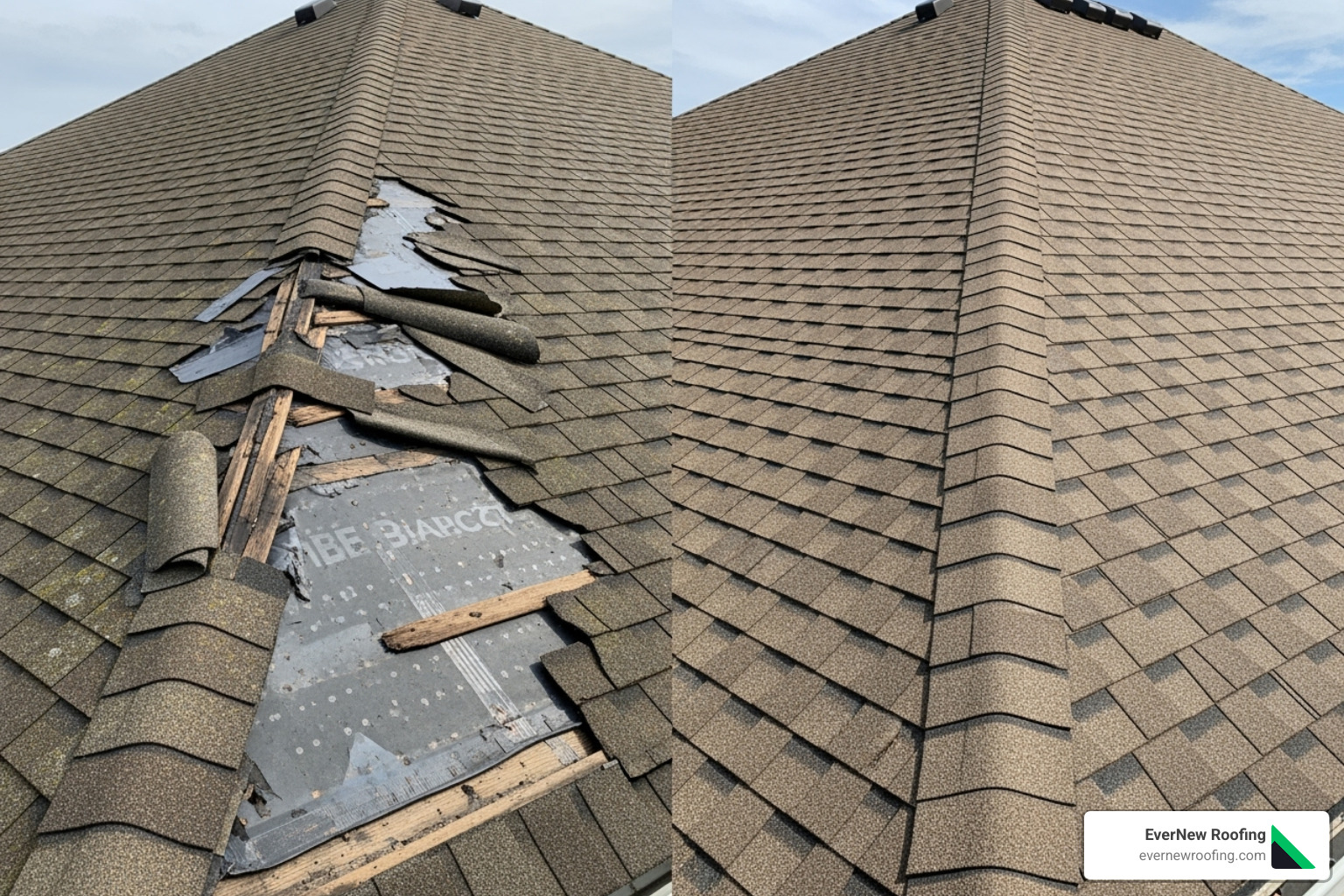
Repairs or partial replacement work best when you’re dealing with localized damage—maybe a few shingles blew off during a storm, or you’ve got a minor leak that’s clearly coming from one specific area. If you catch these issues early and your roof is still relatively young (say, your asphalt shingles are less than 15 years old), a targeted repair is often the smart, cost-effective move. Sometimes it’s just a matter of replacing damaged flashing around a chimney or fixing a small section where a tree branch caused damage.
On the other hand, a full roof replacement becomes necessary when your roof has reached the end of its lifespan. For asphalt shingles, that’s typically around 20-30 years, though some may start showing serious wear at 15 years depending on climate and quality. If you’re seeing widespread granule loss (those little gravel-like pieces filling your gutters), shingles that are curling, cracking, or missing across large sections, or worst of all, a sagging roofline, these are clear signals that repairs won’t cut it anymore.
Persistent leaks that keep coming back despite multiple repair attempts are another red flag. When water finds its way through your roof in multiple places, or the same leak returns after being “fixed,” it usually means the underlying roof system has failed. At that point, you’re not just dealing with surface damage—the structure itself may be compromised.
To help you recognize these warning signs early, take a look at our guide on Key Signs You Need Roof Replacement Without Delay. Catching problems before they escalate can mean the difference between a manageable repair bill and an emergency replacement at the worst possible time.
Smart Ways to Manage Your Roof Replacement Budget
Let’s be honest—a roof replacement is one of those expenses that can keep you up at night. But here’s the good news: with some thoughtful financial planning and smart decision-making, you can make this major investment much more manageable.
One of the most important steps you can take is getting multiple quotes from reputable contractors. This isn’t just about finding the lowest price—it’s about understanding what you’re actually getting for your money. When you compare proposals side-by-side, you’ll see differences in materials, workmanship warranties, and the scope of work included. This gives you real leverage to make an informed decision and ensures you’re not overpaying.
Speaking of warranties, don’t gloss over this crucial detail. A comprehensive warranty on both materials and workmanship can save you thousands of dollars if something goes wrong down the road. Ask questions about what’s covered, for how long, and what might void the warranty. It’s worth spending a few extra minutes understanding these protections now rather than facing unexpected costs later.
For a deeper dive into planning your project from start to finish, our Comprehensive Roof Replacement Guide: Timing, Costs, More walks you through everything you need to know.
How to Reduce the 1800 sq ft roof replacement cost
We know that finding ways to reduce your 1800 sq ft roof replacement cost can make the difference between moving forward with confidence or postponing a necessary project. Here are some proven strategies that actually work.
Timing can save you serious money. If your roof isn’t in critical condition, consider scheduling your replacement during the off-season. Most roofers see slower business in late fall or winter (in milder climates), and they’re often more willing to negotiate on price when their crews need work. You might save 10-20% just by being flexible with timing.
Your material choice has the biggest impact on cost. While premium materials like slate or clay tiles can last a lifetime, asphalt shingles offer an excellent balance of affordability and performance. If you’re budget-conscious, architectural shingles give you better curb appeal and longevity than basic 3-tab shingles without the premium price tag of metal or tile.
Don’t leave money on the table with insurance. If storm damage, hail, or fire caused your roof problems, your homeowner’s insurance might cover most or all of the replacement cost. Document everything with photos, get a professional assessment, and file your claim promptly. Many homeowners are surprised to learn their policy covers more than they expected.
Government assistance programs exist for a reason. Depending on your location and circumstances, you might qualify for home improvement assistance through programs like USDA home repair grants or HUD improvement programs. These programs are specifically designed to help homeowners with necessary repairs, and it’s worth exploring whether you’re eligible.
Consider roof rejuvenation as a game-changing alternative. Here’s where we need to share something important: if your asphalt shingle roof still has life left in it, a full replacement might not be your only option. At EverNew Roofing, we specialize in roof rejuvenation services that can extend your existing shingles’ lifespan by up to 15 years—potentially saving you up to 80% compared to a complete replacement. This process eliminates tear-off costs, disposal fees, and extensive labor expenses. You get instant online quotes, certified professionals, and we even offer emergency and weekend services when you need them. It’s worth getting an assessment to see if rejuvenation makes sense for your situation before committing to a full replacement.
Financing and Increasing Home Value
A new roof is a smart investment, not just an expense. It boosts curb appeal, improves energy efficiency, and can increase your home’s value, with studies showing a return on investment (ROI) between 20% and 50%.
If the upfront 1800 sq ft roof replacement cost is a concern, several financing options can make it manageable. Consider home equity loans (HELOCs), personal loans, or financing plans offered by your roofing contractor to spread the cost over time.
Viewing this as an investment in your home’s long-term value and safety is key. To understand the complete financial picture, our guide on How Roof Replacement Costs Impact Home Value: Key Insights offers valuable perspective.
Frequently Asked Questions about Roof Replacement
What is the typical timeline for replacing an 1800 sq ft roof?
For a standard 1800 sq ft home, an asphalt shingle roof replacement typically takes 1 to 3 days. However, the timeline can be extended by factors like bad weather, a complex or steep roof design, the use of specialized materials like metal or slate, or the findy of unexpected structural damage that needs repair.
How do I know if my roof needs a full replacement?
A full replacement is likely necessary if your roof is showing signs of old age or widespread failure. Key indicators include:
- Age: Your asphalt roof is over 20 years old.
- Widespread Damage: Shingles are curling, cracking, or missing across large areas.
- Granule Loss: You find a lot of shingle granules in your gutters.
- Persistent Leaks: You have recurring leaks that repairs haven’t fixed.
- Sagging: The roof deck is visibly drooping or sagging.
For a detailed look at urgent warning signs, check out our guide on Key Signs You Need Roof Replacement Without Delay.
Does replacing a roof increase my home’s value?
Absolutely. A new roof is a high-value home improvement, typically offering a return on investment (ROI) of 20-50%. It significantly boosts curb appeal, improves energy efficiency, and provides peace of mind to potential buyers by ensuring structural integrity and eliminating the prospect of a near-future major expense. This makes your home more attractive and can increase its market value. To understand the full financial picture, explore our insights on How Roof Replacement Costs Impact Home Value: Key Insights.
Conclusion
Understanding the 1800 sq ft roof replacement cost is the first step toward a confident investment. As you’ve seen, the final price is shaped by your home’s design, material choice, roof complexity, and location, plus additional costs like permits and potential decking repairs.
The most critical step is a professional inspection to understand your roof’s true condition. A full replacement isn’t always the only answer. A repair might suffice, or you could be a perfect candidate for a cost-effective alternative.
At EverNew Roofing, we empower Southeast Michigan homeowners with choices. While we excel at traditional replacements, we specialize in innovative roof rejuvenation. This process can add up to 15 years to your asphalt shingles’ life, saving you up to 80% compared to a full replacement. We provide honest assessments and transparent pricing to maximize your investment.
Your roof deserves the right solution, not just the most expensive one. Whether you’re planning or need emergency service, we’re here to help you make the smartest decision for your home.
Ready to explore your options? Get a professional assessment for your roof replacement from our certified team. We’ll provide a clear, no-pressure evaluation to ensure your roof is ready for anything.