



What is Roof Rejuvenation and Why Your Roof Needs It
Asphalt shingle conditioner is a treatment that restores aging roof shingles by replenishing lost oils and flexibility, extending their lifespan by up to 15 years at a fraction of replacement costs.
Quick Answer for Homeowners:
- What it does: Refreshs brittle asphalt shingles by restoring essential oils that evaporate over time
- How it works: Penetrates deep into shingles or forms a protective surface barrier
- Key benefits: Extends roof life 5-15 years, prevents leaks, stops granule loss
- Cost savings: Up to 80% less expensive than full roof replacement
- Best for: Roofs with moderate wear, granule loss, or brittleness but no major structural damage
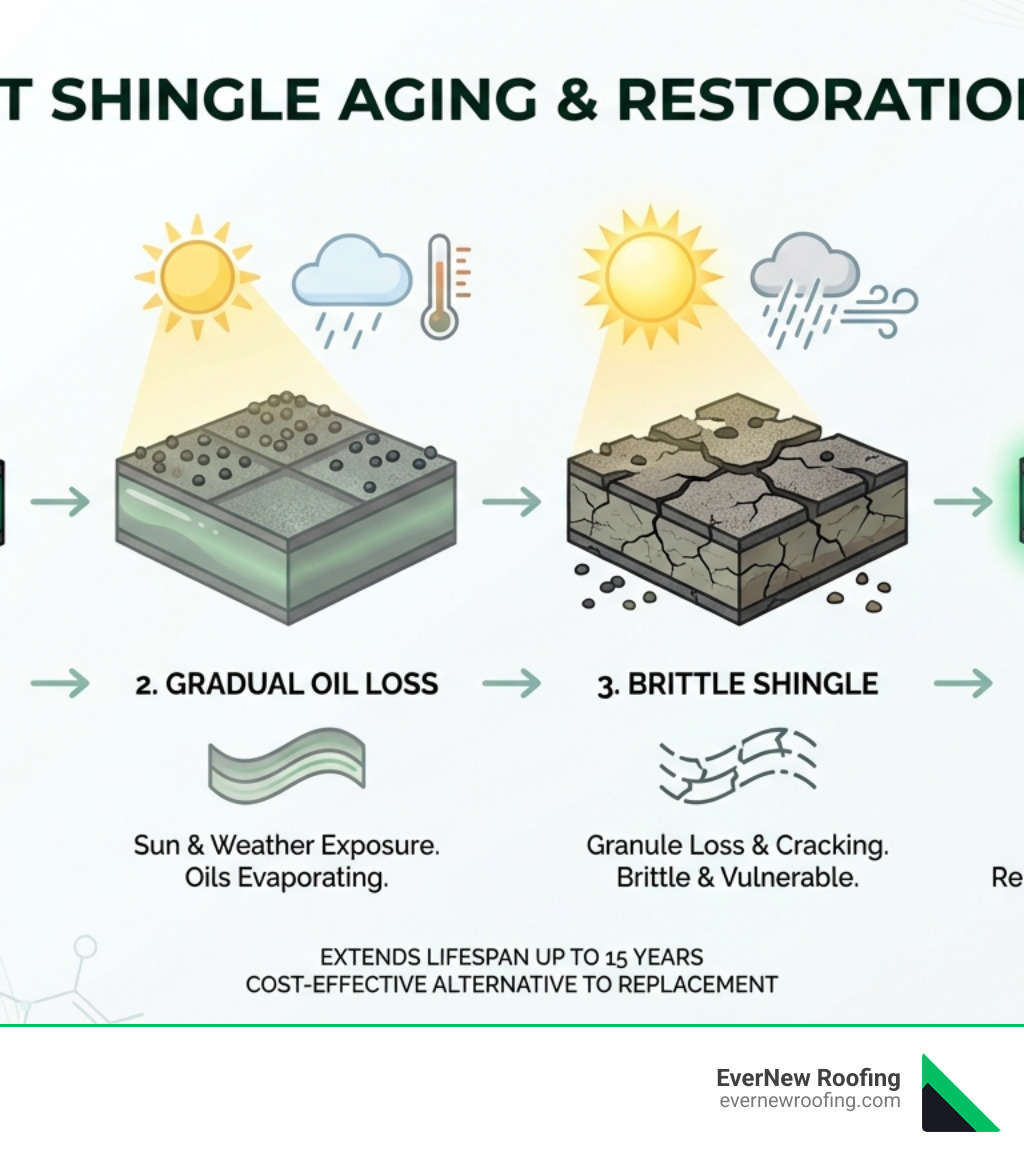
Your asphalt shingles weren’t meant to last forever. Over time, the sun’s UV rays and harsh weather strip away the protective oils that keep your shingles flexible and waterproof. This process, called photo-oxidation, leaves shingles dry, brittle, and prone to cracking. The result? Granule loss, water infiltration, and an aging roof that looks decades older than it should.
But here’s the good news: you don’t always need to spend $20,000 or more on a full roof replacement. Asphalt shingle conditioning offers a cost-effective alternative that can add years to your roof’s life while protecting your home from the elements.
Think of it like moisturizing your skin. Just as your skin dries out without proper care, your shingles lose their essential oils and become damaged. A quality conditioner can restore what’s been lost, bringing back flexibility, improving water resistance, and even revitalizing your roof’s appearance.
I’m Jeffrey Goldman, and in my work helping property owners make informed decisions, I’ve seen how asphalt shingle conditioner treatments save thousands while extending a roof’s protective lifespan. Understanding when to condition versus when to replace is key to making the right choice for your home.
How an Asphalt Shingle Conditioner Revives Your Roof
Think about what happens to a leather jacket left out in the sun too long. It dries out, cracks, and loses its suppleness. Your roof shingles face the same challenge every single day.
Asphalt shingles are manufactured with petroleum-based asphalt that contains essential oils and plasticizers. These oils are what keep your shingles flexible, waterproof, and able to expand and contract with temperature changes. But here’s the problem: continuous exposure to UV rays and Michigan’s wild weather swings causes these oils to evaporate. This process, called photo-oxidation, gradually transforms your once-flexible shingles into brittle, rigid surfaces that crack under stress.
When shingles lose their oils, they behave more like a dried-out potato chip than a protective barrier. They can’t flex with your roof’s natural movement, they can’t shed water as effectively, and they start shedding their protective granules at an alarming rate.
This is where an asphalt shingle conditioner helps.
These specially formulated treatments work by replenishing the oils your shingles have lost over the years. Quality conditioners use micro-penetrant bio-oils that soak deep into the asphalt layer, re-saturating the material from within. This treatment restores their original flexibility and pliability.
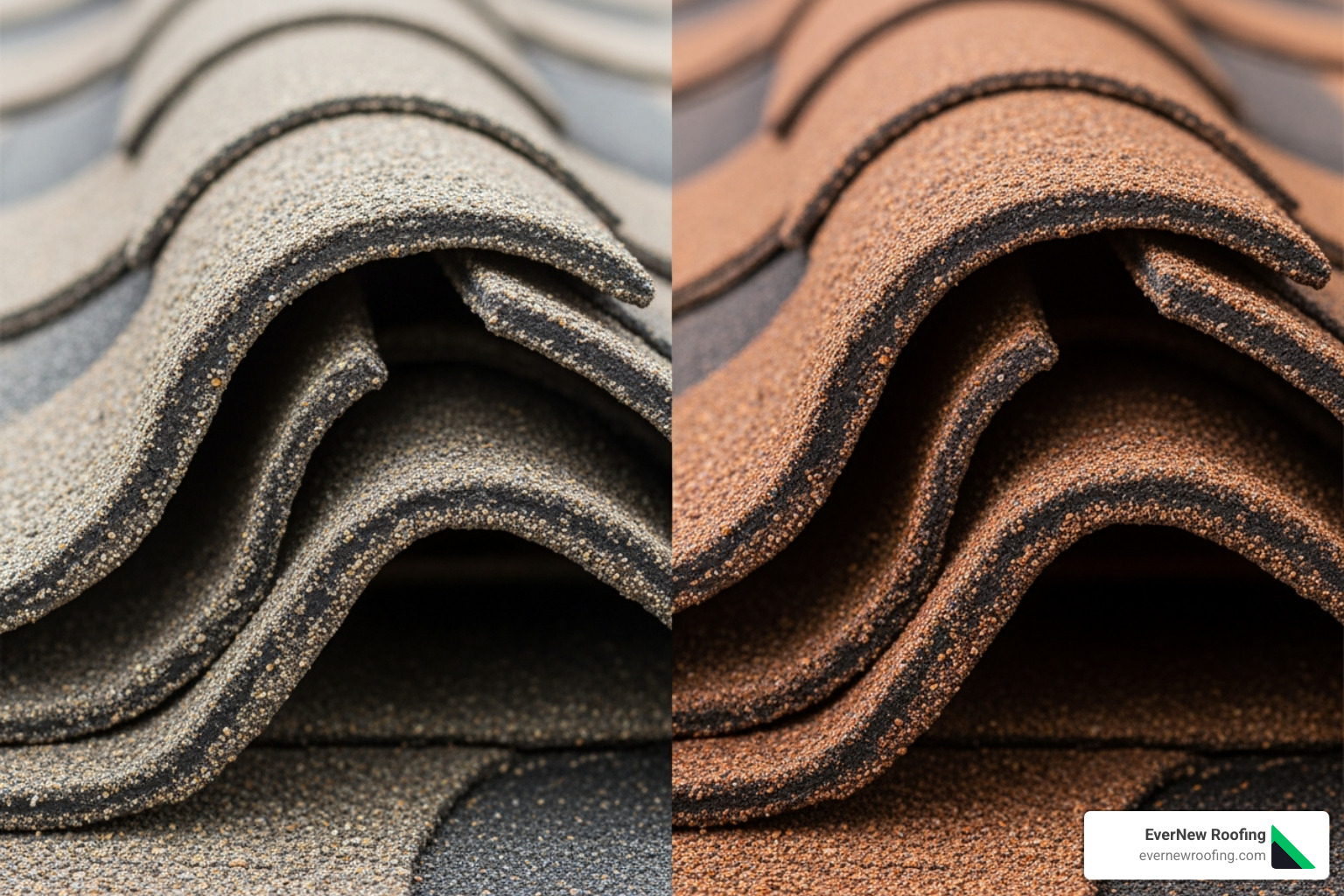
When an asphalt shingle conditioner penetrates your shingles, it dramatically improves granule adhesion. Those tiny granules covering your shingles aren’t just for looks—they’re your roof’s first line of defense against UV damage. When they start falling off, your shingles age much faster. A good conditioner helps lock these granules in place, keeping that protective layer intact.
The treatment also restores your roof’s waterproofing capabilities. As treated shingles regain their flexibility, they create better seals and shed water more effectively. Many conditioners form an additional water-resistant barrier that shields your shingles from rain, snow, and ice, preventing moisture from infiltrating your roof’s underlying structure.
By restoring the shingle’s integrity and helping maintain granule coverage, conditioners reduce the ongoing impact of solar degradation. Some formulas even include additional UV-blocking properties that slow down future photo-oxidation.
The result is a roof that doesn’t just look better—it performs better, protecting your home as it was designed to.
Key Benefits of Treatment
Investing in an asphalt shingle conditioner for your Metro Detroit home is a smart financial decision that pays dividends for years.
The most compelling benefit is lifespan extension. A quality shingle conditioning treatment can add five to fifteen years to your roof’s life, depending on your shingles’ initial condition and the product used. That’s potentially a decade and a half before you need to think about a costly replacement.
This extended lifespan directly translates to leak prevention. As shingles become brittle and crack, they lose their ability to keep water out. Water finds its way through these compromised areas, threatening your home’s interior. Conditioners reseal loose granules and restore water-shedding capabilities, keeping your home dry even during Michigan’s heaviest storms.
If you’ve noticed dark streaks or green patches on your roof, you’ll appreciate the mildew resistance many modern conditioners provide. These treatments help prevent algae, mold, and mildew growth, especially important during our humid summers. This keeps your roof looking cleaner while preventing organic growth that can actually shorten your shingles’ lifespan.
The cost savings are what most homeowners care about most. With full roof replacements often running $20,000 or more in our area, an asphalt shingle conditioner treatment typically costs up to 80% less. That’s thousands of dollars staying in your pocket while still protecting your home effectively.
Finally, there’s improved curb appeal. Years of sun exposure fade your shingles, making your entire home look tired and dated. Conditioners can restore much of that lost color, giving your roof a noticeable facelift. We’ve seen shingles return to a richer, darker appearance that’s closer to their original color—it’s like turning back the clock on your home’s exterior.
Want to explore all the advantages in more detail? Check out our insights on Discover the Benefits of Roof Rejuvenation Advantages.
The Eco-Friendly Advantage
Choosing an asphalt shingle conditioner is also an environmentally responsible choice.
Every time a roof gets replaced, tons of old shingles end up in landfills. The average residential roof replacement generates about three to five tons of waste. Multiply that by thousands of homes, and you can see why roofing waste is a significant environmental problem.
By extending your existing roof’s life, you’re directly preventing that waste. The roof rejuvenation industry has already diverted over 152,647 tons of waste from landfills. That’s the equivalent of keeping thousands of roofs out of the waste stream.
Many modern conditioners are formulated with sustainability in mind. Some rejuvenators are plant-based—often derived from corn—and carry USDA Certified bio-based designations. This means they’re made from renewable resources rather than petroleum-based chemicals.
The best products also feature non-toxic formulas that are water-based and free from solvents, VOCs (volatile organic compounds), and other environmentally harmful ingredients. This matters because any overspray during application won’t harm your family, pets, landscaping, or your car. Most can be easily washed away with just soap and water.
When you choose an asphalt shingle conditioner, you’re taking a greener approach to home maintenance. You’re reducing your carbon footprint while still protecting your biggest investment. It’s a win-win that aligns perfectly with The Environmental Benefits of Roof Rejuvenation.
Choosing Your Treatment: Rejuvenators vs. Sealers
When you’re ready to treat your aging roof with an asphalt shingle conditioner, you’ll find yourself choosing between two distinct approaches: penetrating bio-oil rejuvenators and surface sealing coatings. Think of it like choosing between a deep moisturizer that soaks into your skin versus a protective sunscreen that sits on top. Both extend your roof’s life, but they work in fundamentally different ways.
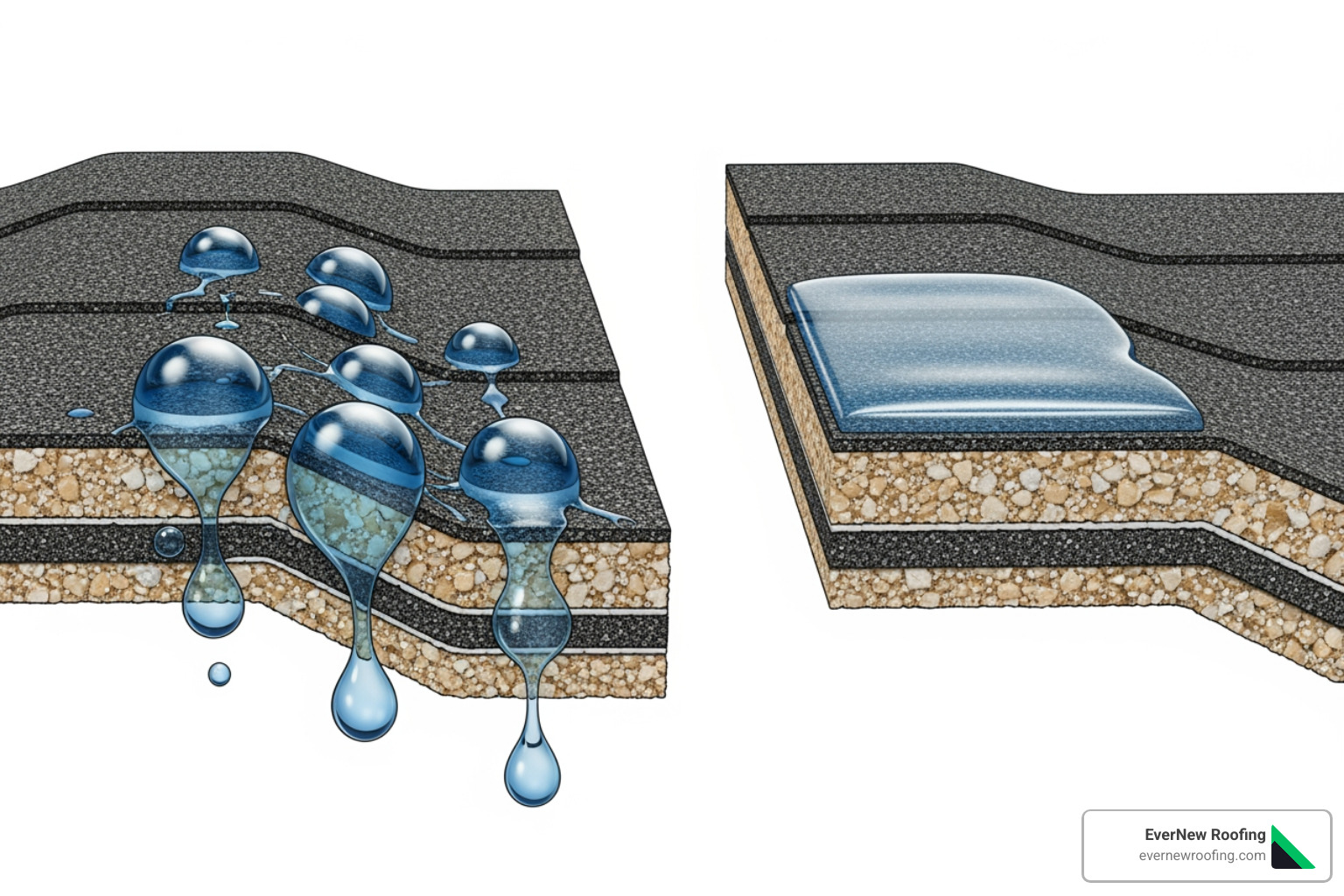
The key difference comes down to breathability versus barrier protection. Penetrating treatments work from the inside out, restoring your shingle’s natural flexibility and allowing moisture to escape naturally. Surface coatings create a protective shield on top, locking everything in place but potentially trapping moisture if not properly formulated.
Understanding which approach makes sense for your Metro Detroit home depends on your roof’s current condition, your budget, and your long-term goals. Let’s break down what each type of treatment actually does.
Penetrating Bio-Oil Rejuvenators
These products are the deep conditioners of the roofing world. Penetrating bio-oil rejuvenators are typically made from plant-based oils that soak directly into your shingles’ asphalt layer, working from the inside out to restore what time and weather have stolen.
The magic happens at a molecular level. These micro-penetrant formulas fill the microscopic voids in dried-out asphalt, essentially bringing your shingles back to life. As the plant-based oils re-saturate the asphalt, your shingles regain their flexibility, becoming pliable enough to handle Michigan’s brutal freeze-thaw cycles without cracking or curling.
One of the biggest advantages? These treatments allow your shingles to breathe. Unlike traditional elastomeric coatings that can seal everything up tight, bio-oil rejuvenators let moisture vapor escape naturally. This is crucial for long-term roof health because trapped moisture can lead to serious problems down the road.
You’ll also notice a visual difference. As the oils replenish what’s been lost, shingles typically restore their color, appearing darker and closer to their original shade. It’s like watching your roof get younger before your eyes.
Surface Sealing Coatings
Surface coatings take a different approach entirely. These acrylic-based or acrylic-epoxy formulations create a protective film right on top of your shingles, acting as armor against whatever Mother Nature throws at your roof.
The primary job of these coatings is forming a protective barrier against UV radiation, rain, wind, and harsh weather. They’re particularly effective at locking in granules, which is essential because granule loss is one of the most visible signs your roof is aging. By adhering the existing granular material firmly in place, these coatings prevent further deterioration.
The water-resistant film these products create is impressively robust. It prevents water from reaching the asphalt membrane underneath, stopping leaks before they start and keeping harmful elements from leaching out of your shingles. Many quality sealers dry clear, maintaining your roof’s original appearance without yellowing or discoloration over time.
However, there’s a trade-off to consider. While some advanced surface coatings are breathable and allow moisture vapor to pass through, thicker elastomeric coatings may trap moisture underneath if not properly formulated or applied. This is why choosing the right product and having it professionally applied matters so much.
Both types of asphalt shingle conditioner offer real benefits for homeowners in Washtenaw County and throughout our service areas. The right choice depends on your specific roof’s condition, age, and what you’re hoping to achieve. Our certified professionals can assess your roof and recommend the treatment that makes the most sense for your situation and budget.
The Application Process: A Step-by-Step Guide
Applying an asphalt shingle conditioner is a careful, methodical process. While some products are marketed as DIY-friendly, our experience shows that proper preparation and professional technique make all the difference. Here’s how a professional application unfolds, from prep work to the final protective coating.
Preparing Your Roof for an Asphalt Shingle Conditioner
Proper prep work is essential for the conditioner to do its job effectively. The first step is removing all loose debris—leaves, twigs, and branches—to ensure the conditioner makes direct contact with the shingles.
Next comes deep cleaning. Any dirt, mold, or mildew needs to be thoroughly removed. For Michigan homes, this is especially important due to our humid summers. We typically use a strong bleach or chlorine solution mixed with water to eliminate these organic invaders, as they can interfere with how well the conditioner bonds to your shingles.
All roof defects must be repaired before conditioning begins. This includes securing loose shingles, replacing damaged or missing ones, re-sealing flashings, and sealing exposed nails. Conditioning a damaged roof won’t fix underlying issues. A thorough Roofing Inspection: Why It’s Essential and What Homeowners Should Expect ensures we catch all these problems before treatment begins.
Finally, your roof needs to be completely dry. We also check the weather forecast carefully, making sure there’s no rain expected for at least 24 hours after application (some products only require one hour, but we prefer being cautious). Applying conditioner to a damp roof or right before a rainstorm is a waste of money.
Applying the Asphalt Shingle Conditioner
Once the roof is ready, the application begins. This is where experience and precision matter.
Most asphalt shingle conditioner products are spray-applied using specialized equipment. Professional-grade airless sprayers deliver consistent coverage and ensure the product penetrates evenly. DIY methods like garden sprayers or rollers rarely match professional results.
Temperature plays an important role in application success. The sweet spot is typically above 45 degrees Fahrenheit; applying when it’s colder can reduce the product’s effectiveness. In Michigan, this means we schedule treatments during spring, summer, and early fall.
Beyond avoiding rain, we carefully monitor wind conditions to prevent overspray. We work methodically, starting from the top of the roof and moving toward the eaves, applying the conditioner in smooth, even passes for comprehensive coverage without pooling or run-off.
For older, more porous shingles, a second coat applied in the opposite direction of the first often yields the best results, ensuring every nook and cranny gets treated.
Critically, roof surfaces become incredibly slippery when wet with conditioner. That’s why we strictly follow all OSHA.com safety guidelines, using proper fall protection equipment and immediately rinsing any overspray on walking surfaces. This is a vital safety measure.
DIY vs. Professional Application
While the idea of a DIY project is tempting, we consistently recommend professional application, especially for homeowners throughout Macomb County, Oakland County, and our other Michigan service areas.
Safety is the primary concern. Working at heights is dangerous, and the slippery conditioner multiplies that risk. Professional roofers have the training, safety equipment, and protocols to minimize fall hazards and prevent accidents.
Professional equipment makes a significant difference. Achieving even, comprehensive coverage requires industrial-grade spray equipment that most homeowners don’t have. Our certified professionals use specialized tools for this application, ensuring optimal penetration and coverage.
Warranty coverage is another key factor. When we professionally apply a conditioner, you typically receive a transferable 5-year warranty covering materials and application. DIY applications usually only cover material defects—if you make a mistake, you’re on your own.
Professional expertise extends beyond just knowing how to spray. Our team understands the nuances of different shingle types, can assess your roof’s specific condition, and knows which products work best for Michigan’s climate based on real-world experience.
Finally, efficiency matters. What might take you an entire weekend, our team can finish in hours, with better results and less disruption to your life.
While saving a few dollars is appealing, the risks and the peace of mind from a professional application make it the smarter investment. When you’re ready to Find Trusted Roofing Contractors Near Me for Quality Service, we’re here to help you make the right decision for your roof and your family’s safety.
Conditioning vs. Full Roof Replacement: A Cost Breakdown
The decision between an asphalt shingle conditioner and a full roof replacement can feel overwhelming. Understanding the differences can help you make a confident, informed choice for your home and budget.
The financial contrast alone is striking. A typical conditioning treatment in Southeast Michigan runs between $1,500 and $4,000, depending on your roof’s size and condition. Compare that to a full roof replacement, which easily costs $15,000 to $30,000 or more for an average-sized home. That’s a potential savings of up to 80%.
But cost isn’t the only factor. A conditioning treatment is usually completed in just one day with minimal disruption. In contrast, a full replacement typically takes three to seven days and involves significant noise, debris, and activity around your property.
The environmental impact is also compelling. Every conditioning treatment keeps tons of old shingles out of landfills—we’ve collectively saved over 152,647 tons of waste through rejuvenation services. When you choose an asphalt shingle conditioner, you’re making an environmentally responsible choice that reduces construction waste and conserves resources.
Here’s how these options stack up side by side:
| Feature | Roof Conditioning | Roof Replacement |
|---|---|---|
| Average Cost | $1,500 – $4,000 | $15,000 – $30,000+ |
| Project Time | 1 day | 3-7 days |
| Disruption | Minimal | Significant (noise, debris, activity) |
| Lifespan Extension | 5-15 years added | 20-30 years (new roof) |
| Environmental Impact | Low (diverts waste from landfills) | High (generates 1-3 tons of waste) |
Of course, lifespan extension differs between the two approaches. A quality conditioning treatment can add five to fifteen years to your existing roof’s life, which is substantial when your shingles still have good structural integrity. A brand-new roof will last twenty to thirty years, but you’re also paying premium prices for those extra years.
When is Conditioning the Right Choice?
Many roofs are good candidates for conditioning, which is great news for your wallet. If your roof fits these criteria, conditioning could be the perfect solution.
Aging but structurally sound shingles are ideal candidates. If your roof is showing its age but isn’t falling apart, conditioning can turn back the clock. We’re talking about shingles that are starting to look tired and weathered but haven’t crossed the line into serious damage territory.
Minor to moderate granule loss is another green light. When you notice those colorful granules collecting in your gutters or spot patches where shingles look a bit bare, that’s your roof crying out for rejuvenation. The conditioner helps lock in remaining granules and prevents further loss, protecting the asphalt layer beneath.
Brittleness and loss of flexibility are classic signs that your shingles have lost their essential oils. If your shingles feel stiff or you notice they’re starting to crack under pressure (but haven’t developed widespread severe cracking yet), conditioning can restore that lost flexibility before serious damage occurs.
Fading color might seem purely cosmetic, but it’s actually a visible sign of photo-oxidation—the same process that makes shingles brittle. When your roof looks noticeably lighter or more washed-out than it used to, conditioning can restore some of that original richness while addressing the underlying oil depletion.
Wondering if your roof is showing these signs? Check out our guide on 5 Signs Your Roof Needs Rejuvenation for a more detailed assessment.
When is Replacement Necessary?
Conditioning is remarkable, but it’s not magic. Some roofs have reached the end of their serviceable life, and no amount of conditioning will fix fundamental structural problems. Knowing when to replace is crucial for protecting your home.
Widespread physical damage is a dealbreaker for conditioning. When large sections of your roof show severe deterioration, with shingles that are deeply cracked, broken, or damaged beyond surface-level wear, it’s time for a new roof. Conditioning works best on shingles that still have structural integrity.
Missing shingles signal a more serious problem. A few missing shingles after a storm might just need replacement, but if you’re regularly finding shingles in your yard or noticing bare spots across your roof, the underlying attachment and the shingles themselves are likely compromised beyond what conditioning can address.
Severe curling or cracking throughout the roof indicates advanced deterioration. We’re not talking about minor edge curling or a few surface cracks—we mean widespread curling where shingles are lifting dramatically or extensive cracking patterns across multiple roof sections. At this stage, the shingles have lost too much structural integrity to benefit from conditioning.
Structural issues like sagging roof decks, visible water damage in your attic, or rotted decking require immediate attention that goes far beyond surface conditioning. These problems indicate that moisture has penetrated your roof system, potentially compromising the wood structure beneath your shingles.
Major active leaks or evidence of long-term water infiltration mean your roof has already failed in its primary job—keeping water out. While conditioning can prevent future leaks on an otherwise sound roof, it can’t repair existing water damage or stop leaks caused by severely compromised shingles.
If you’re seeing these warning signs, our article on Key Signs You Need Roof Replacement Without Delay can help you understand what’s happening and why replacement might be your best option.
The bottom line? An asphalt shingle conditioner offers tremendous value when applied to the right roof at the right time. It’s about being smart with your investment—extending what’s still good rather than replacing what doesn’t need replacing yet. Our team can assess your specific situation and give you honest guidance on which path makes the most sense for your home.