


Why Cracked Shingles Deserve Your Immediate Attention
Cracked shingle repair is an urgent task that protects your home from water damage, structural issues, and costly future repairs. Here’s a quick overview:
Quick Fix for Cracked Shingles:
- Clean the damaged area of debris.
- Lift the cracked shingle gently.
- Apply roofing cement underneath the crack.
- Press the shingle back down firmly.
- Seal the top of the crack with more cement.
- Smooth with a putty knife and sprinkle granules to blend.
When you spot a cracked shingle, it’s more than a cosmetic issue—it’s an open invitation for water to seep into your home. Left unaddressed, a small crack can lead to multiple leaks within 6-12 months, potentially causing thousands of dollars in damage to your ceiling, walls, and insulation.
The good news is that most repairs are straightforward. While professional repairs cost between $150-$1,500, a DIY fix is much cheaper if you have the right tools and knowledge. The key is to act fast before a small crack becomes a cascade of problems.
I’m Jeffrey Goldman, and I’ve learned the value of preventative maintenance. Understanding when to DIY and when to call professionals like EverNew Roofing can save you significant money while keeping your home safe.
Identifying the Problem: Causes and Signs of Shingle Damage
Your roof constantly battles sun, rain, and wind, and over time, shingles can crack. Before starting a cracked shingle repair, it’s crucial to understand the causes and spot the warning signs early.
Common Causes of Cracked Shingles
Cracks are usually the result of prolonged exposure to weather and time. Here are the typical culprits:
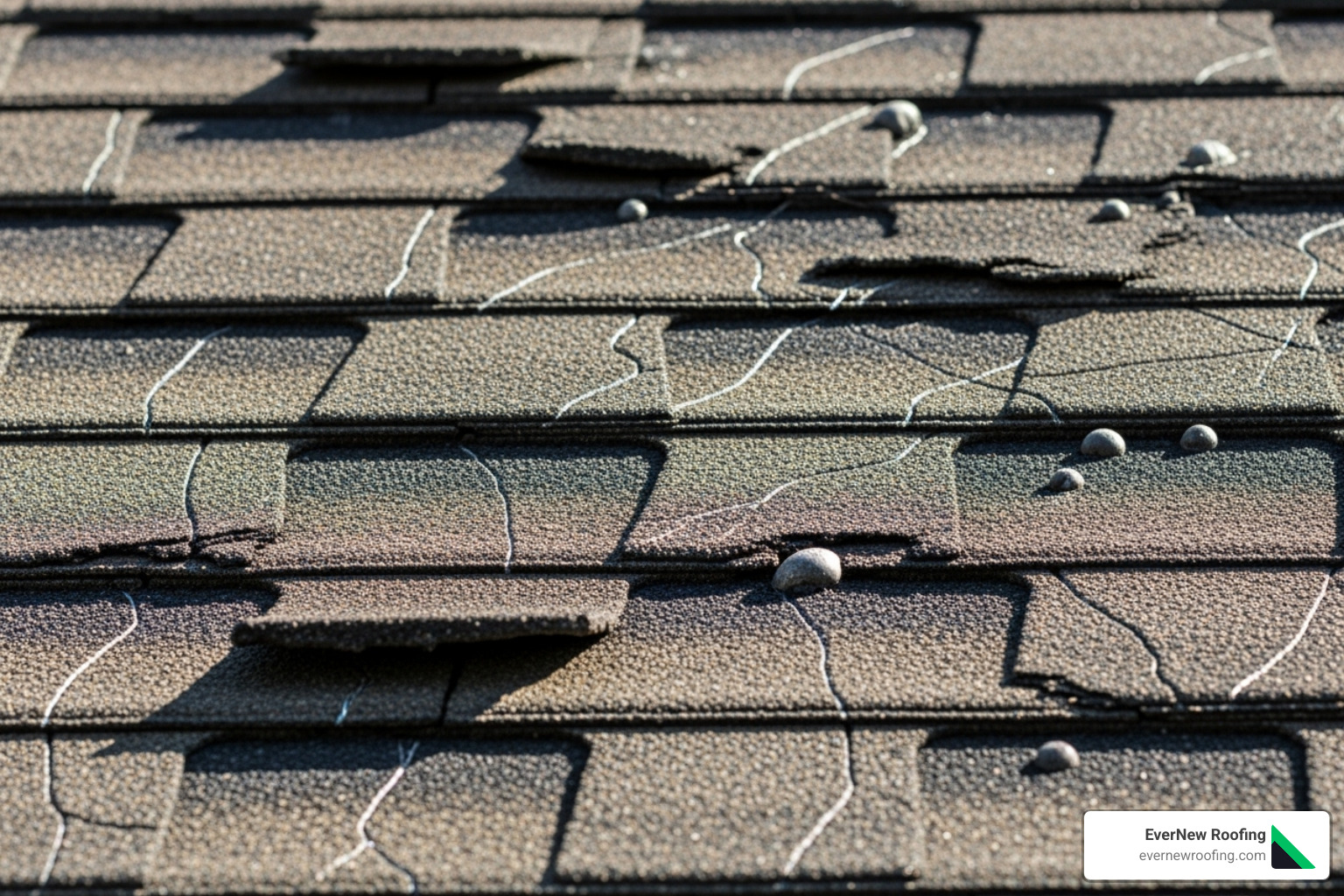
- Temperature fluctuations: Shingles expand in the heat and contract in the cold. Over time, this cycle makes the asphalt brittle and prone to cracking.
- Hail impact: Even small hailstones can strike with enough force to create spiderweb cracks or direct splits in shingles.
- Wind stress: High winds lift and bend shingles, creating stress points that eventually crack, especially along the edges.
- Age-related brittleness: As shingles age, the oils that keep them flexible evaporate. Most asphalt shingles typically last between 15 and 30 years, but harsh conditions can shorten this lifespan. Once dry, they crack easily.
- UV radiation: The sun’s rays break down the asphalt compounds in shingles, accelerating the drying process and making them more susceptible to cracking.
- Foot traffic: Walking on your roof, especially when shingles are old or cold, can cause immediate cracking.
- Poor installation: Shingles that are nailed too tightly or improperly aligned are under constant stress, leading to premature failure.
Signs Your Shingles Need Attention
Regular visual inspections are your best defense. For a deeper dive, see our guide on roofing inspection and what homeowners should expect.
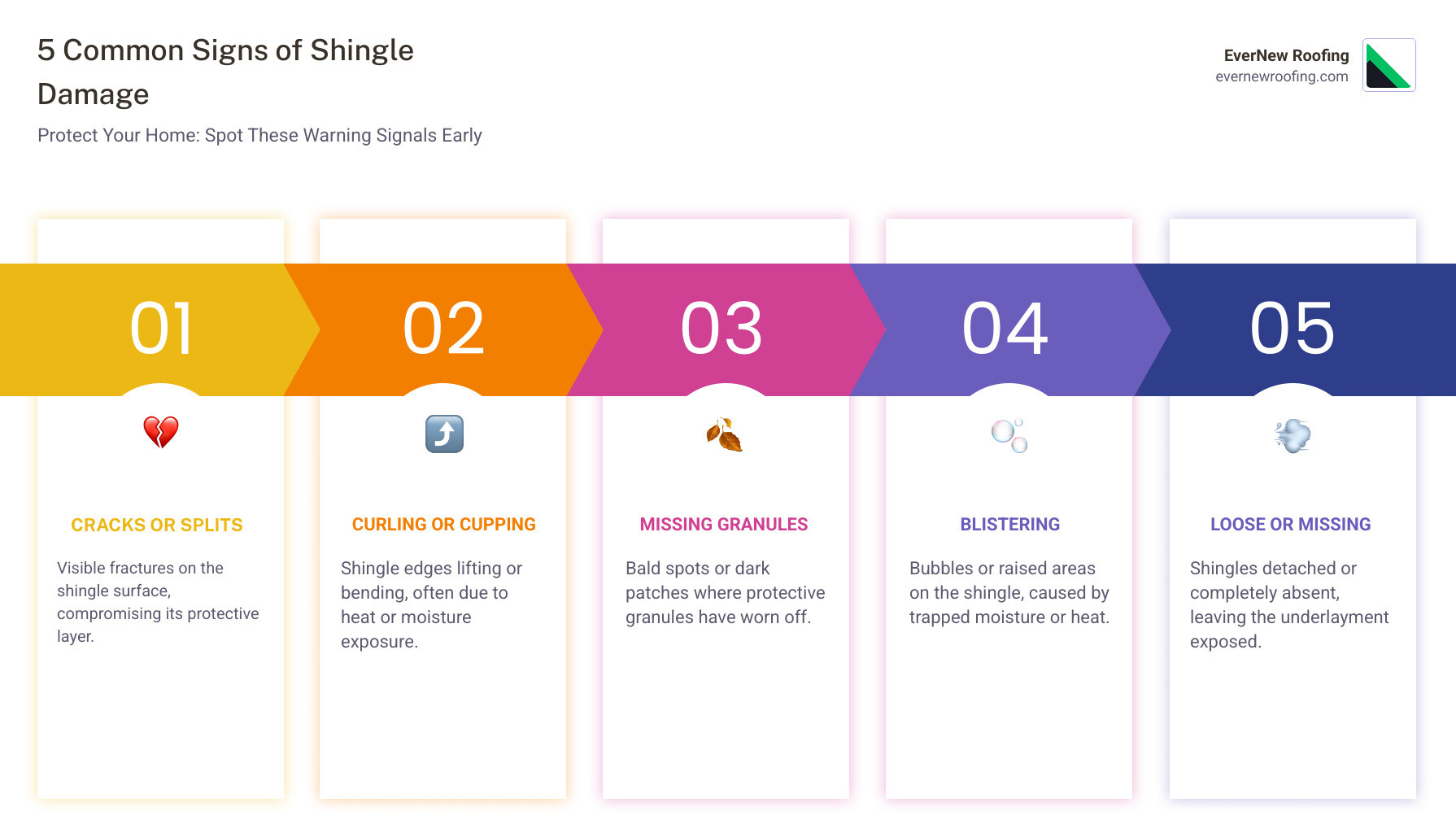
- Granules in your gutters: These sand-like bits are your shingles’ protective layer. Losing them means your roof is becoming vulnerable.
- Curling edges: This indicates shingles are losing flexibility. Curled shingles crack easily and are more likely to be torn off by wind.
- Blistering or bubbling: Trapped moisture or heat causes these weak spots, which often rupture and expose the underlayment.
- Missing shingles: This is an obvious red flag, giving water a direct path to the layers below.
- Water stains on your ceiling or walls: These brown or yellow spots mean you already have a leak from an overdue cracked shingle repair.
- Dark streaks or algae growth: These patches hold moisture against shingles, speeding up deterioration.
- A sagging roof deck: This is a structural emergency indicating severe water damage. Call a professional immediately.
- Daylight in your attic: Pinpricks of light mean you have holes in your roof.
Check your roof twice a year and after major storms. If you see several of these signs, you may want to read our article on 5 signs your roof needs rejuvenation.
Cracked Shingle Repair: A Step-by-Step Guide
Spotted a cracked shingle? For minor damage, a DIY repair is straightforward. However, timing and safety are critical. The best time for a cracked shingle repair is on a warm, dry, and calm day, with temperatures around 60°F (15°C) or higher. Cold makes shingles brittle, while extreme heat makes them too soft. Sealants also need dry conditions to cure properly.
For a comprehensive overview, This Old House offers an excellent resource: How To Repair and Replace Roof Shingles.
Tools and Materials You’ll Need
Gather your supplies before you start to avoid multiple trips up and down the ladder.
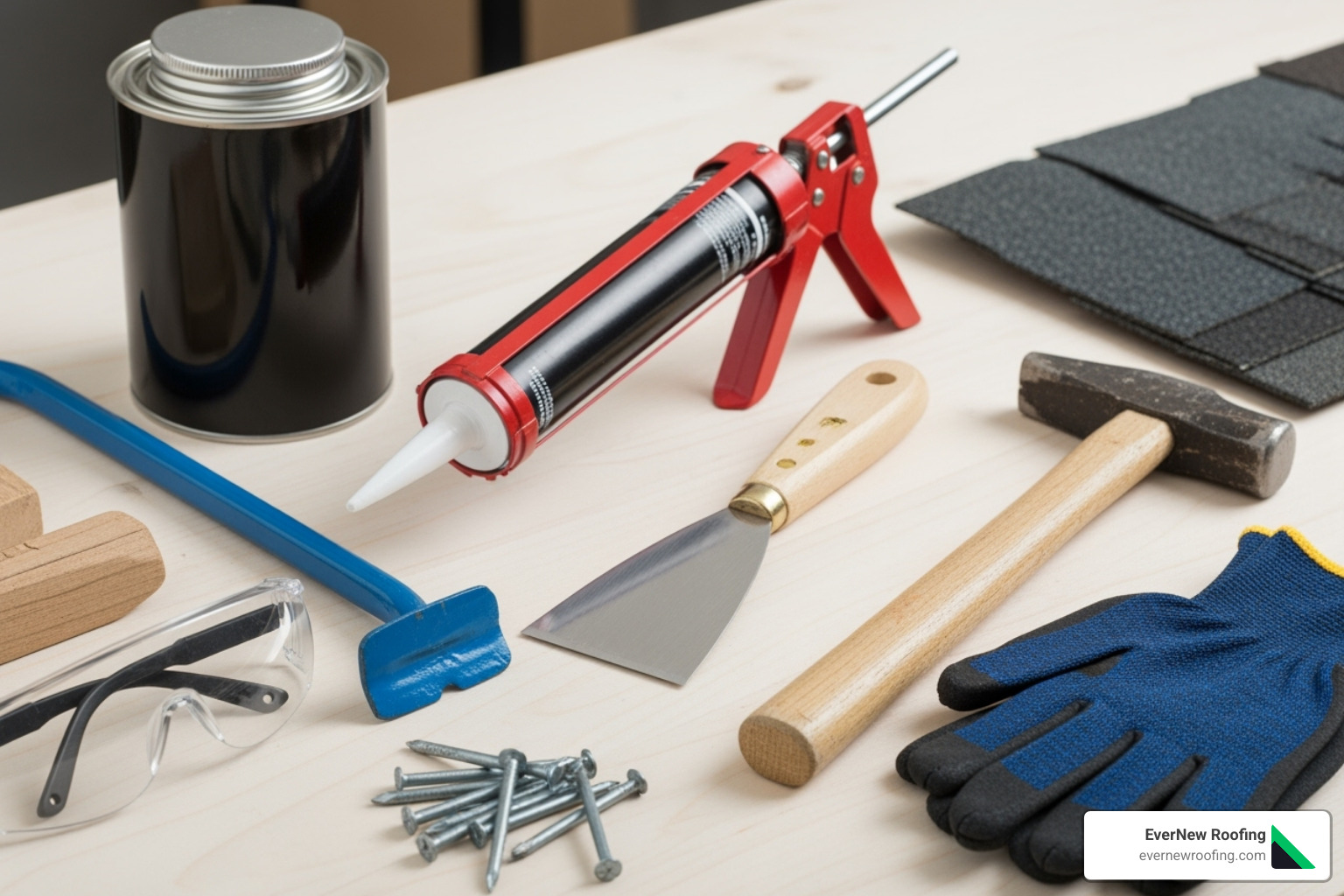
- Safety Gear: This is non-negotiable. You’ll need a sturdy ladder, non-slip shoes, heavy-duty gloves, and safety glasses. For steep roofs (over a 4:12 pitch), a fall-arrest harness is essential. Never work alone.
- Repair Tools: A utility knife, flat pry bar, hammer, caulking gun, putty knife, and a stiff-bristle brush.
- Materials: Roofing cement (in a tube or bucket), a replacement shingle (if needed), and 1¼-inch galvanized roofing nails. Optional: shingle granules for camouflage.
The Step-by-Step Process for Cracked Shingle Repair
This method is effective for minor to moderate cracks where the shingle is still intact.
- Clean the area: Use a brush to sweep away all dirt, debris, and loose granules. The surface must be clean and dry for the cement to bond.
- Gently lift the shingle: Slide a flat pry bar under the damaged shingle and lift just enough to access the crack’s underside. Be gentle to avoid creating more damage.
- Apply roofing cement under the crack: Squeeze a thick bead of cement directly underneath the crack, extending slightly beyond its edges.
- Press the shingle down firmly: Flatten the shingle back into place, ensuring good contact with the cement.
- Apply sealant over the crack: Add a second bead of cement on top of the crack for a double layer of protection.
- Smooth everything out: Use a putty knife to spread the cement into a thin, even layer over the crack.
- Camouflage with granules (optional): Sprinkle granules over the wet cement and gently press them in to help the repair blend in.
Allow the cement at least 24 hours of dry weather to cure. If the shingle is curled, place a heavy object on it while it dries.
Emergency Measures for Cracked Shingles
If a storm hits or you find a leak and can’t perform a full repair, use temporary measures to prevent water from entering your home.
- Tarp the area: Cover the damaged section with a waterproof tarp, extending it well beyond the crack. Secure it with sandbags or 2x4s.
- Apply roofing cement: For a small, isolated crack, a thick layer of cement can provide a temporary seal on a dry surface.
These are temporary fixes. If you’re dealing with a large crack, active leaks, or feel unsafe on the roof, call the professionals. At EverNew Roofing, we offer emergency services to prevent further damage. Check out our Quick Solutions for Roof Repair Near Me: Find Reliable Help for immediate assistance.
Repair or Replace? Making the Smart Call
So you’ve found a cracked shingle. Should you repair it or replace it entirely? The right decision depends on the severity of the damage, the age of your roof, and whether the problem is isolated or widespread.
That most asphalt shingles typically last between 15 and 30 years. Basic three-tab shingles last about 15-20 years, while architectural shingles can last 25-30 years. If your roof is nearing the end of its lifespan, a single crack might signal that the entire system is failing, and patching it is only a temporary solution.
When to Replace a Shingle Instead of Repairing It
A DIY cracked shingle repair is great for minor issues, but sometimes a repair just isn’t enough. Here’s when you should opt for a replacement:
- Large or deep cracks: If a crack is wide or runs across most of the shingle, roofing cement alone won’t provide a durable seal.
- Multiple splits or tears: A shingle with numerous cracks has lost its structural integrity and can no longer function as a protective barrier.
- Missing sections: You can’t repair what isn’t there. If a piece of the shingle has broken off, you need a full replacement.
- Severe curling or blistering: This indicates the shingle is too brittle or compromised to be effectively repaired. Attempting to flatten it will likely cause more cracking.
- Extensive granule loss: If a cracked shingle has large bald spots, it has lost its UV protection. The exposed asphalt will deteriorate quickly, even if the crack is sealed.
- Compromised underlayment: If the damage extends to the barrier beneath the shingle, the shingle must be removed to properly repair the underlayment.
- An aging roof with widespread cracking: If your 18-year-old roof is developing new cracks frequently, you’re better off investing in a roof rejuvenation or replacement rather than playing whack-a-mole. Our guide on Key Roof Restoration Techniques for Asphalt Shingles Explained can help you explore options.
- Structural issues: If you notice a sagging roof, active leaks in multiple spots, or damage to over 30% of your shingles, it’s time to call a professional for an assessment.
When in doubt, get a professional opinion. A small investment in an expert assessment can save you from a repair that won’t last or from unnecessarily replacing a shingle that could have been fixed.
Prevention and Safety: Protecting Your Roof and Yourself
The best cracked shingle repair is the one you never have to do. Regular maintenance can significantly reduce the chances of shingles cracking. And when you do need to get on the roof, safety must be your top priority.
How to Prevent Shingles From Cracking
Think of your roof like your car; it needs regular maintenance to last. Here’s how to keep your shingles healthy:
- Proper attic ventilation: A well-ventilated attic prevents heat from building up and baking your shingles from below. In winter, it helps prevent damaging ice dams. The National Weather Service has great info on how to prevent ice dams.
- Regular inspections: Check your roof twice a year (spring and fall) and after major storms to catch small issues before they become big problems.
- Gutter cleaning: Clogged gutters cause water to back up onto your roof, which accelerates shingle deterioration.
- Trimming overhanging branches: This prevents branches from scraping off protective granules and reduces the risk of a heavy branch falling and damaging your roof.
- Avoid walking on your roof: Foot traffic can crack shingles, especially when they are old or cold. If you must go on the roof, do so on a warm day and wear soft-soled shoes.
- Roof rejuvenation treatments: For asphalt roofs that are 6-10 years old, treatments can replenish lost oils, restoring flexibility and waterproofing. This can extend your roof’s life for a fraction of the cost of replacement. Find more tips in our guide to Affordable Roof Maintenance Tips Every Homeowner Needs.
Critical Safety Precautions for Working on a Roof
Working on a roof is dangerous. A fall from even a single-story house can cause serious injury. If you feel uncomfortable at any point, call a professional.
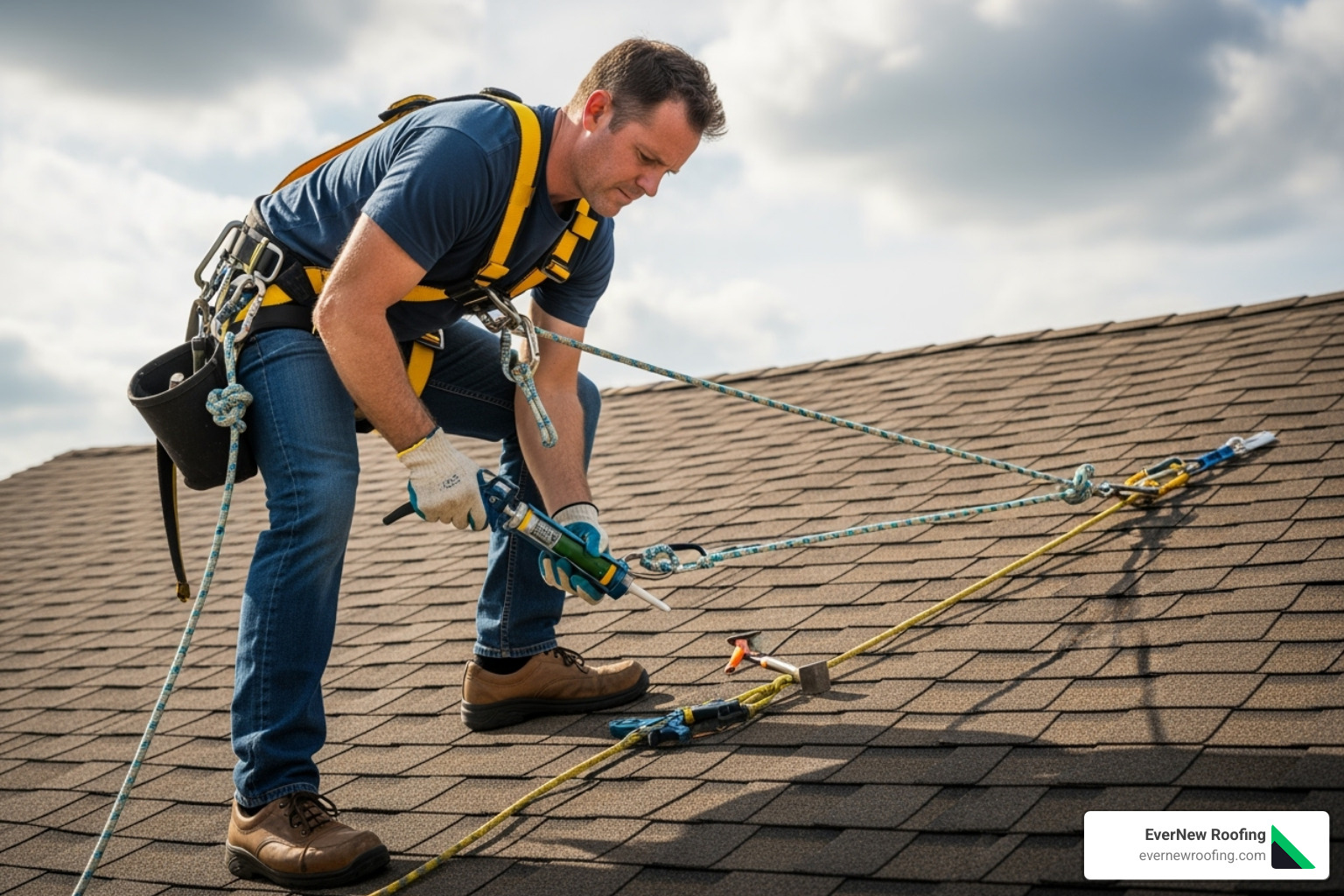
- Never work alone. Always have a spotter on the ground who can provide assistance and call for help if needed.
- Use a stable ladder. Place your ladder on firm, level ground using the 4:1 ratio (one foot away from the wall for every four feet of height). Extend it at least three feet above the roofline.
- Wear proper safety gear. This includes non-slip roofing shoes, heavy-duty gloves, and safety glasses. For any roof with a pitch steeper than 4:12, a fall-arrest harness system is essential.
- Choose your day carefully. Only work when the roof is completely dry. Avoid windy days, as gusts can knock you off balance.
- Be aware of electrical wires. Look for overhead power lines before setting up your ladder and maintain a safe distance at all times.
- Organize your tools. Use a tool belt or bucket to prevent tools from sliding off the roof.
- Know your limits. If your roof is steep, high, or the damage is extensive, call a licensed and insured professional. Your safety is worth more than any money you might save.
Frequently Asked Questions about Shingle Repair
Many homeowners have questions about shingle repair. Here are answers to some of the most common ones to help you make confident decisions about protecting your home.
What are the risks of not repairing cracked shingles?
Ignoring a cracked shingle is a gamble. It allows water to seep into your home, leading to serious and expensive problems. Once water gets past the shingle, it can cause:
- Structural rot: The wooden decking and support beams of your roof can absorb moisture and rot, weakening the entire structure.
- Mold and mildew: Damp, dark attics are ideal breeding grounds for mold, which can cause health issues and damage your belongings.
- Reduced insulation: Wet insulation becomes ineffective, leading to higher energy bills as your heating and cooling systems work harder.
- Interior damage: Water can drip into ceilings and walls, causing ugly stains, peeling paint, and crumbling drywall.
According to Forbes, a minor leak can cost $150-$1,500 to fix if caught early. If you wait until structural damage and mold occur, you could face repair bills in the tens of thousands. A simple cracked shingle repair is a small price to pay to avoid a catastrophe.
How long do asphalt shingles typically last?
The lifespan of asphalt shingles depends on several factors. The type of shingle is a major one: basic three-tab shingles generally last 15-20 years, while thicker architectural shingles can last 25-30 years or more.
Climate also plays a huge role. In places like Michigan, the freeze-thaw cycles and intense summer sun can shorten a roof’s lifespan. Finally, installation quality and maintenance are critical. A well-installed and maintained roof with proper attic ventilation will always last longer.
So, while asphalt shingles typically last between 15 and 30 years, your roof’s actual longevity depends on this combination of shingle quality, climate, installation, and ongoing care.
Can I perform a shingle repair in any weather?
No. Weather conditions are critical for both safety and the effectiveness of the repair. The ideal time for roof work is on a warm, dry, and calm day (around 60°F or higher).
- Cold weather makes shingles brittle and likely to snap if you try to lift them. Sealants also won’t cure properly in the cold.
- Extremely hot weather makes shingles soft and easy to damage with foot traffic.
- Rain, snow, or ice make a roof dangerously slick. Never attempt to work on a wet roof. Sealants also require a dry surface to bond.
If you need an urgent cracked shingle repair during bad weather, use a temporary measure like covering the area with a tarp. Then, wait for conditions to improve or call a professional. At EverNew Roofing, we have the equipment and safety protocols for emergency and weekend services when waiting isn’t an option.
Conclusion
We’ve covered how to spot shingle damage, perform a cracked shingle repair, and know when to call a professional. The most important takeaway is that acting quickly on small cracks prevents major problems like water damage, mold, and structural issues, saving you thousands of dollars.
Many minor repairs are manageable DIY projects. However, knowing when a problem is beyond a quick fix is a sign of a wise homeowner. For extensive damage, an aging roof, or any job that makes you feel unsafe on a ladder, professional help is the smart move.
That’s where we come in. At EverNew Roofing, we help homeowners across Southeast Michigan protect their biggest investment. Our roof rejuvenation services can extend the life of your asphalt shingles for years, saving you up to 80% compared to a full replacement by restoring their flexibility and waterproofing.
Roof problems don’t always happen during business hours. That’s why we offer emergency and weekend services throughout Lenawee, Livingston, Macomb, Monroe, Oakland, St Clair, and Wayne Counties. Our certified professionals are ready when you need them.
Whether you tackle a simple repair yourself or call us for an assessment, the important thing is to take action. Don’t let a small crack become a big catastrophe.
Contact us for a free roof rejuvenation quote and let’s discuss how to keep your roof healthy and your home safe for years to come.