


Why Understanding Labor Costs Is Key to Budgeting Your Roof Project
The labor cost to roof a house typically ranges from $2.00 to $3.50 per square foot for standard asphalt shingles, or $200 to $350 per roofing square (100 sq. ft.). For an average 2,000 sq. ft. home, this means $3,000 to $7,000 in labor alone, which often makes up 40% to 70% of your total bill. Premium materials like metal or tile can push labor costs higher, from $4.00 to $17.00 per square foot.
Key factors driving labor costs include:
- Roof complexity: Steep pitches and multiple valleys can add 25-50% to labor time.
- Material type: Metal and tile require specialized skills, increasing rates.
- Tear-off and disposal: Removing old shingles adds $1 to $5 per square foot.
- Regional wage rates: Hourly rates vary from $40-$80 depending on location.
- Contractor overhead: Professionals include insurance and business costs in their bids.
Labor covers more than just installation; it includes safety equipment, insurance, permits, and the expertise to meet building codes and warranty requirements. Understanding these costs helps you compare bids accurately and budget for the full scope of your project. As an expert in the field, I’ve seen how this knowledge empowers homeowners to make informed decisions and choose quality contractors.
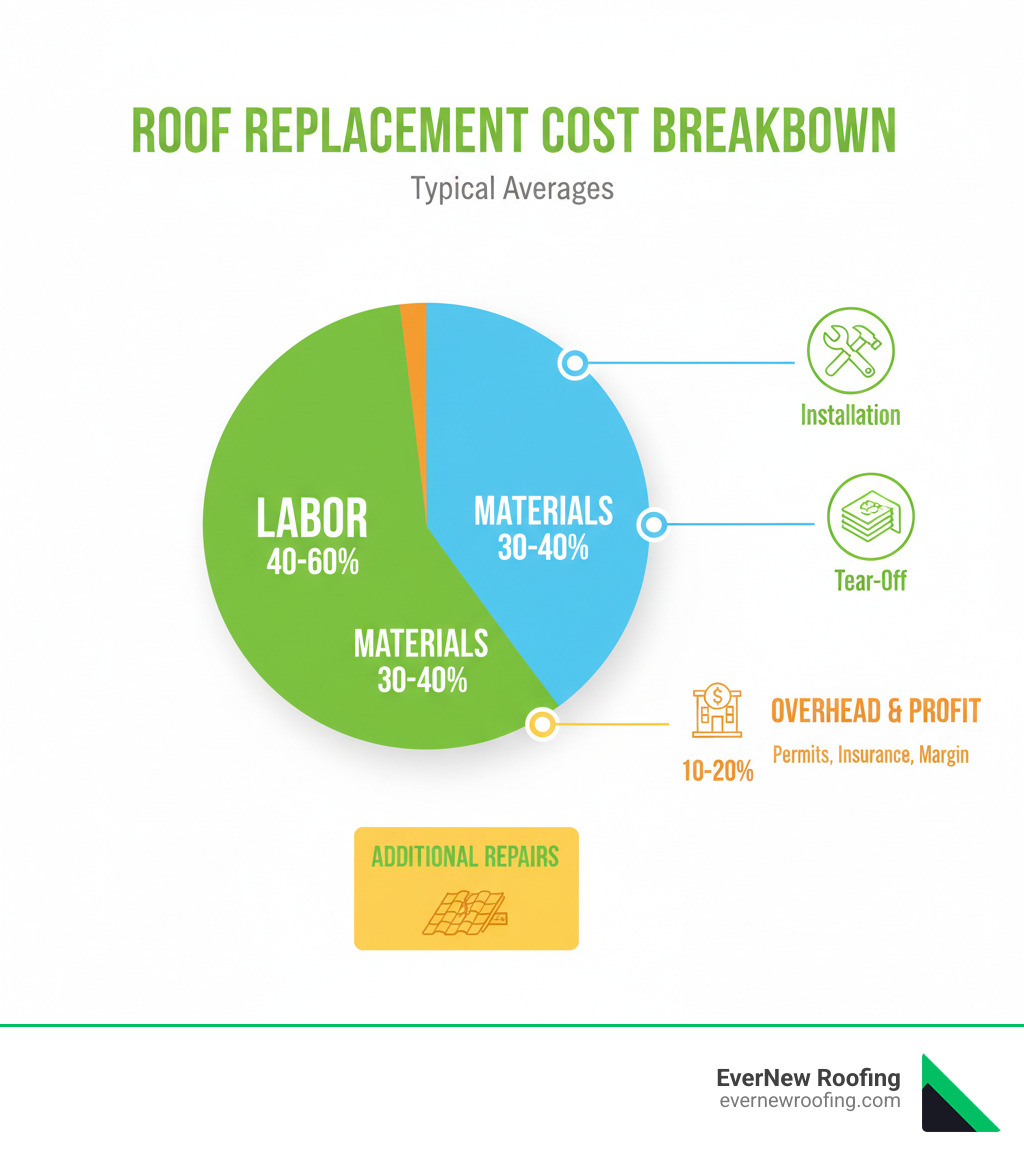
What is the Average Labor Cost to Roof a House?
The labor cost to roof a house varies widely, as contractors quote labor either per square foot or per “square” (a 100-square-foot area). Understanding this measurement is the first step to comparing quotes. While national averages provide a baseline, local factors in areas like Southeast Michigan can cause costs to fluctuate. Labor typically accounts for 40% to 70% of your total roofing bill, a percentage that shifts based on your roof’s complexity and material choice. For a deeper dive, see our guide on What Affects Roof Replacement Costs for Homes and Offices.
Average Labor Cost Per Square Foot and Per Square
Here are the specific labor costs for common roofing materials:
For asphalt shingles, the most popular choice, expect a labor cost to roof a house of $2.00 to $3.50 per square foot, or $200 to $350 per roofing square. Their budget-friendly and straightforward installation keeps labor costs predictable.
For metal roofing, labor charges are higher due to the specialized skills and precision required. Expect to pay between $4.00 to $8.00 per square foot, or $400 to $800 per roofing square. This reflects the expertise needed for a weathertight installation.
These figures cover installation labor only and do not include materials or the cost of tearing off your old roof. For more detailed wage data, the Occupational Employment and Wage Statistics from the Bureau of Labor Statistics is a comprehensive resource.
Typical Roofer Hourly Rates
While most contractors quote by the project, their prices are based on hourly rates. According to the U.S. Bureau of Labor Statistics, the median hourly wage for roofers was $24.05 in May 2023. However, contractors typically charge customers $40 to $80 per hour. This difference covers the cost of running a legitimate business, including:
- Contractor Overhead: Business expenses like office rent, marketing, and vehicle maintenance, plus a 10% to 25% profit margin.
- Insurance Costs: Liability insurance and workers’ compensation protect both you and the crew.
- Experience Level: You’re paying for the expertise of a seasoned crew that works efficiently and spots potential issues.
- Regional Variance: Rates are higher in metro areas like Metro Detroit compared to rural areas, reflecting the local cost of living.
Labor vs. Materials: A Typical Cost Breakdown
Generally, the labor cost to roof a house makes up 50% to 70% of the total project cost, with materials accounting for the other 30% to 50%. This is often referred to as a 60/40 split, with labor being the larger portion.
This ratio can change. Premium materials increase the material cost percentage, but they also often require more skilled installation, which can drive up the labor percentage as well. Labor-intensive jobs, such as those on steep or complex roofs, will always have a higher labor cost percentage. While material costs are somewhat fixed, quality labor is an investment in your roof’s longevity. Cutting corners on labor can lead to shoddy work, voided warranties, and costly future repairs.
How Roofing Material Dictates Labor Charges
The labor cost to roof a house can vary dramatically based on your material choice. It’s not just the price of the materials, but the skill, time, and effort required for proper installation. Standard asphalt shingles are relatively lightweight and forgiving, allowing for quick installation. In contrast, materials like metal, tile, or slate require specialized tools, precision, and significantly more time.
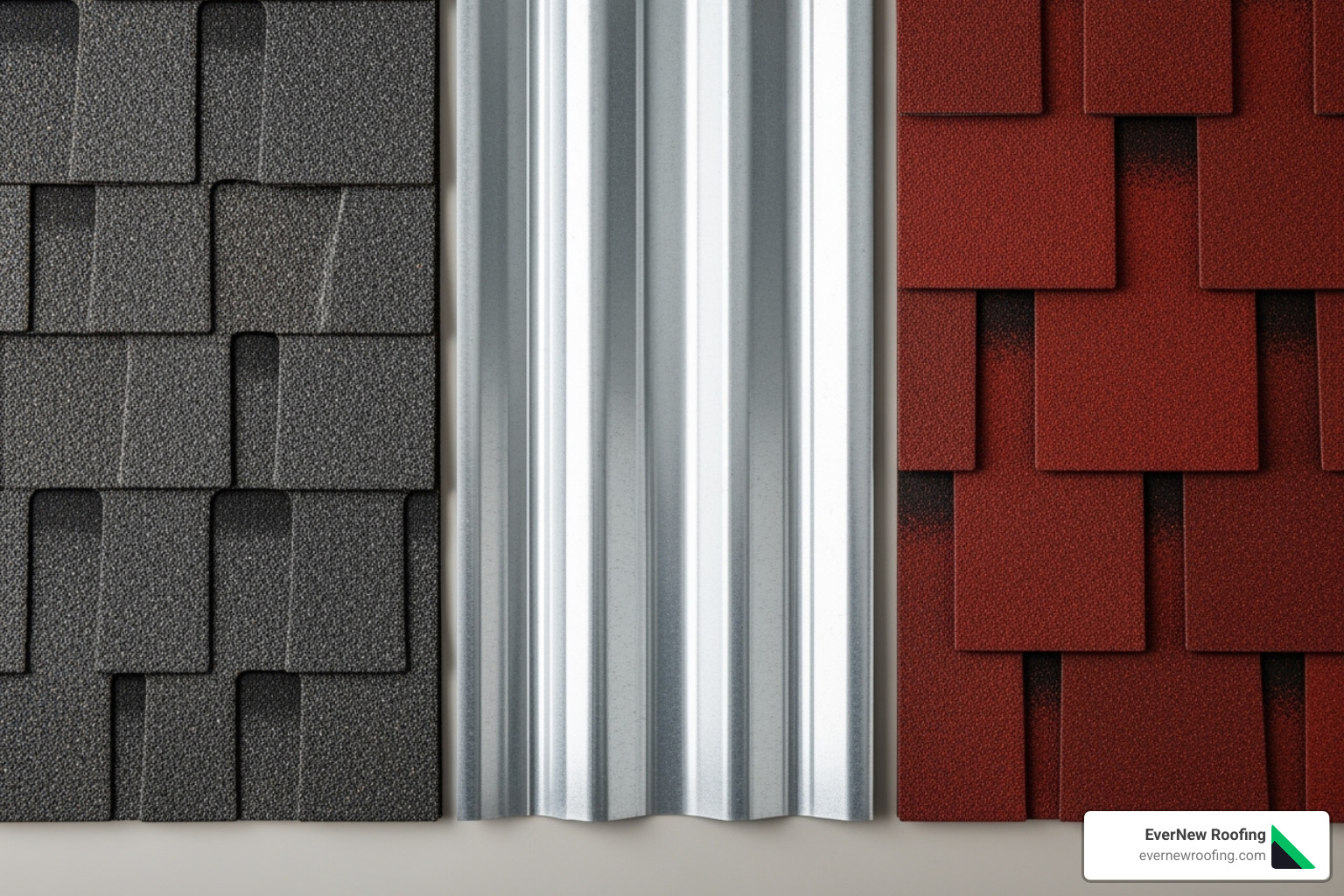
Material weight is another major factor. A bundle of asphalt shingles weighs around 75 pounds, while clay tiles can weigh up to 1,000 pounds per square. Heavier materials require reinforced roof structures, special lifting equipment, and more crew members to handle the load safely, all of which increases labor time and cost.
Labor Costs for Common Roofing Materials
Here’s what you can expect to pay in labor alone for different roofing materials:
| Roofing Material | Average Labor Cost Per Square (100 sq. ft.) |
|---|---|
| Asphalt Shingles | $200 – $350 |
| Architectural Shingles | $200 – $350 |
| Standing-Seam Metal | $400 – $800 |
| Clay/Concrete Tile | $500 – $1,700 |
| Wood Shakes | $400 – $800 |
| Slate / Stone | $400 – $1,400 |
| Flat / Rolled / Built-up | $200 – $450 |
Note: These figures represent labor costs only and do not include material expenses.
For a 2,000 square foot home (20 squares), labor for asphalt shingles might be $4,000-$7,000, while clay tile could be $10,000-$34,000.
Why Some Materials Have a Higher Labor Cost to Roof a House
The labor cost to roof a house jumps for premium materials for several reasons. Installation time is a primary factor; a slate roof can take a week or more, while an asphalt shingle roof might take a day or two. Each slate tile requires individual cutting and placement, a process that cannot be rushed.
The required skill level also varies. While most experienced roofers can install shingles, standing-seam metal and slate require specialized training and years of experience. This expertise comes at a higher price. Furthermore, heavier and more fragile materials demand more elaborate safety equipment and careful handling, slowing down the process to prevent breakage. Finally, manufacturer warranties for premium materials often mandate specific, meticulous installation techniques. Adhering to these requirements adds time and cost but is essential for long-term protection.
At EverNew Roofing, we are transparent about how material choice affects your project. While we specialize in extending the life of asphalt shingle roofs, we believe in providing clear information for when a full replacement is necessary.
7 Key Factors That Influence Your Final Labor Bill
Your final labor cost to roof a house depends on your home’s unique characteristics. A thorough roof inspection will identify these variables, helping you understand your contractor’s quote and budget realistically.
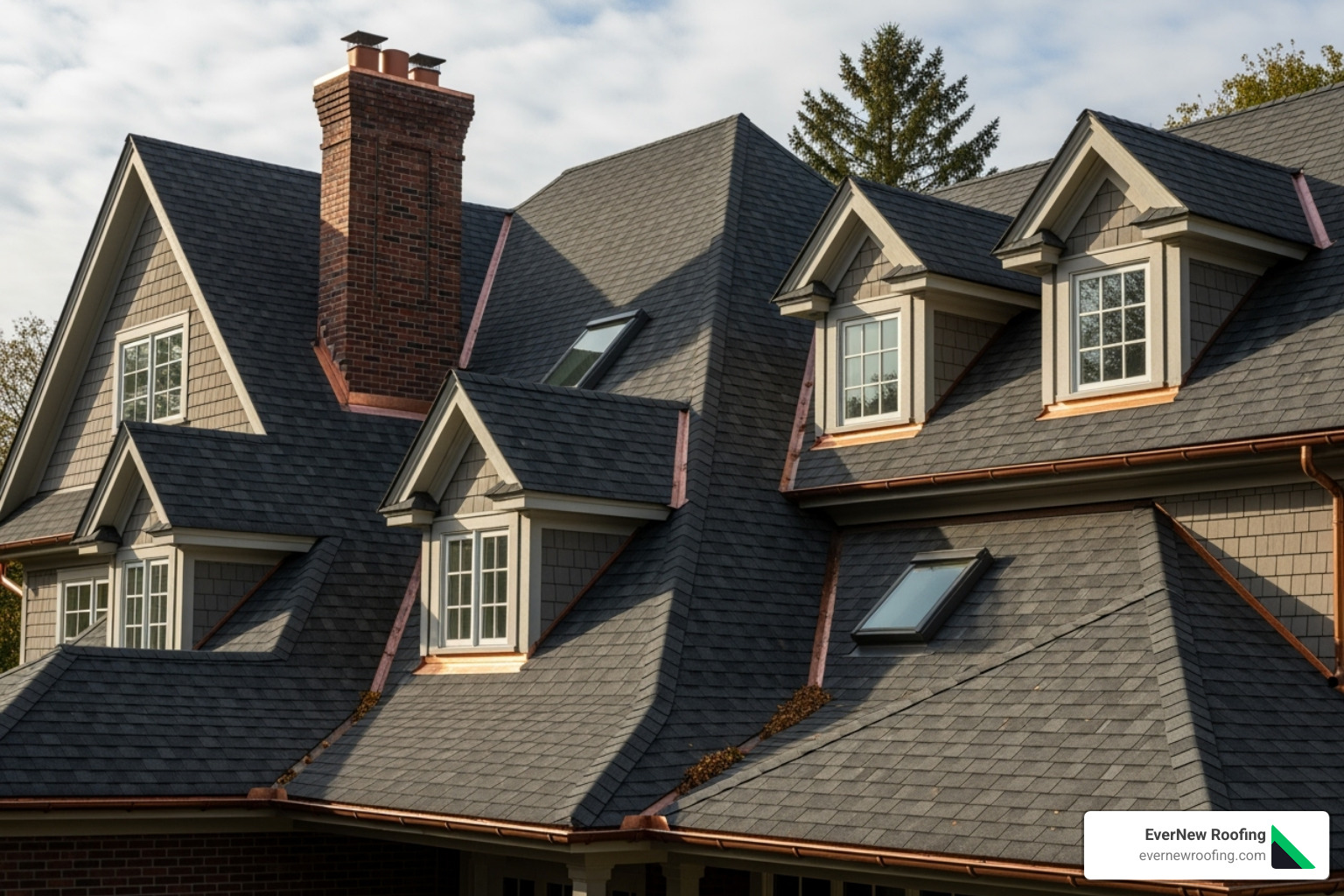
1. Roof Complexity and Pitch
A roof’s pitch and complexity are major cost drivers. A steep slope (a 9/12 pitch or greater) requires special safety harnesses and slows down the crew, increasing labor costs by 25% to 50%. Even medium-slope roofs (5/12 to 8/12) can increase costs by 10% to 15%. Architectural features like multiple stories, dormers, valleys, and hips also add to the bill, as they require time-consuming custom cutting and flashing.
2. Roof Accessibility
If your home is surrounded by landscaping, fences, or is on a tight urban lot, it presents challenges for the crew. Limited access in areas like Metro Detroit can make it difficult to position equipment and may add 5% to 10% to your quote due to the extra time needed to move materials. Suburban and rural homes with easier access typically have lower labor costs.
3. Regional Wage Differences
Labor rates are heavily influenced by your location. Metropolitan areas like Oakland or Washtenaw County have a higher cost of living and greater demand, pushing labor rates up to around $4 per square foot for asphalt shingles. In more rural parts of Michigan, like Lenawee or Livingston County, rates may be closer to $2 per square foot. Authoritative wage data from the BLS shows how wages vary significantly by region.
4. Full Replacement vs. New Construction
A full roof replacement includes a “tear-off”—stripping away old shingles and underlayment. This physically demanding work adds $1 to $5 per square foot to your bill, plus disposal fees. The benefit is that it allows for a full inspection of the roof deck. If you need a replacement, see our guide on Key Signs You Need Roof Replacement Without Delay. New construction roofing is simpler, as it starts with a clean deck, eliminating tear-off labor and costs.
5. Time of Year and Demand
Timing your project can save you money. Late spring through fall is peak roofing season, leading to higher prices. Booking in the shoulder season (late winter or early spring) can save you 5% to 15% on labor as contractors are filling their schedules. Conversely, after major storms, demand surges and prices rise.
6. Permits and Inspections
Most roof replacements require a municipal permit, costing between $100 and $500. Your contractor handles this administrative process, and the time is built into the labor cost. A final inspection, typically $100 to $400, is also required to ensure the work meets local building codes, providing you with crucial quality assurance.
7. Contractor Experience and Insurance
You get what you pay for with labor. Licensed, insured professionals charge more, but their rates cover essential protections. Reputable companies carry liability insurance and workers’ compensation, protecting you from financial risk if an accident occurs. They also offer a workmanship warranty, demonstrating they stand behind their installation. These costs, along with business overhead, are part of a professional operation that will be around to honor its commitments.
Uncovering Additional and Hidden Labor Costs
Even with a detailed estimate, some labor costs only appear after work begins. Once a crew tears off your old shingles, they may find hidden issues that impact the final labor cost to roof a house. A trustworthy contractor will discuss these possibilities upfront. For a full overview of the process, read our guide on Understanding What to Expect from Roof Replacement Services.
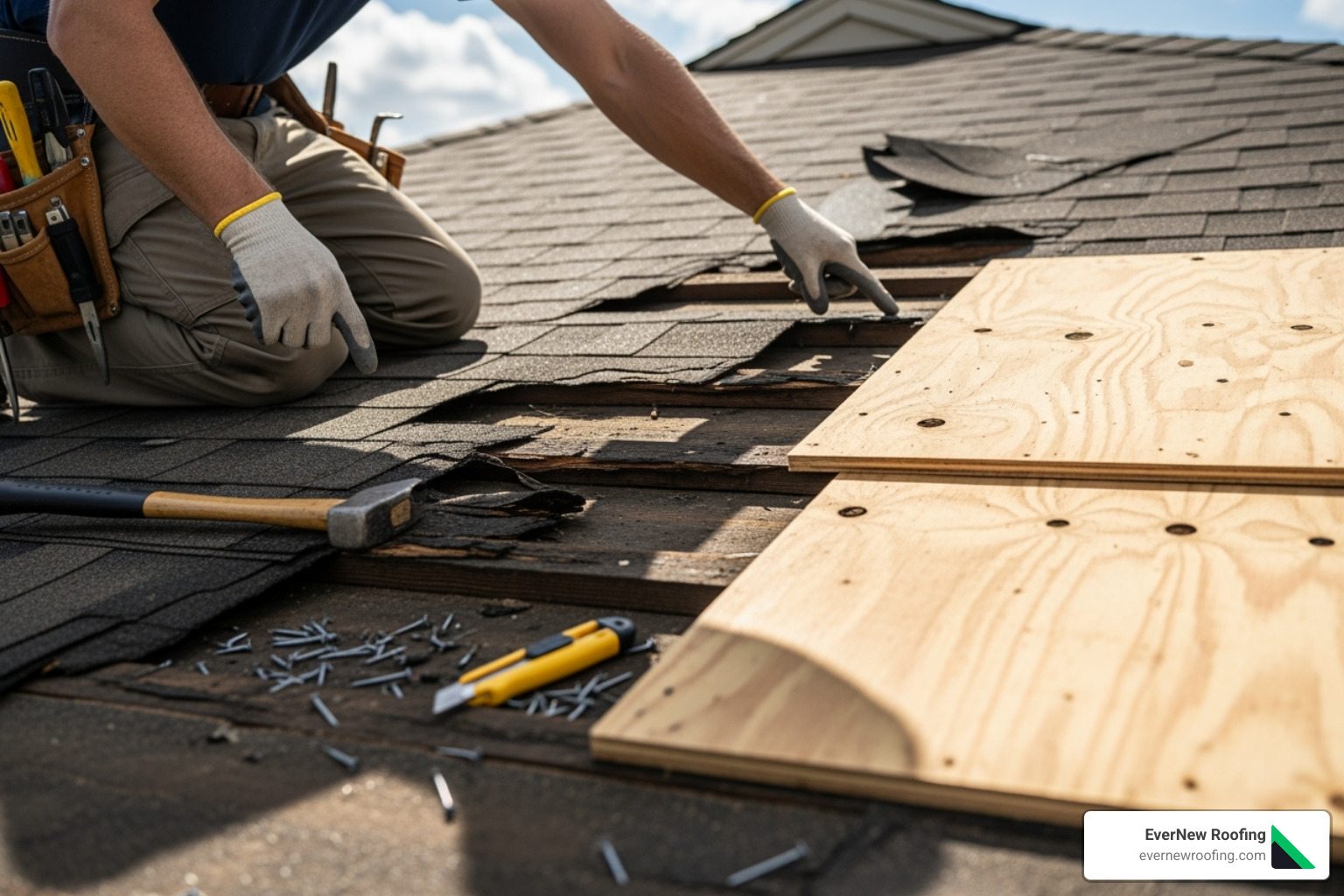
The Labor Cost to Roof a House: Tear-Off and Disposal
Removing your old roof is a physically demanding part of the project. The labor for tear-off and disposal typically costs $1 to $5 per square foot. This price can increase if your roof has multiple layers of old shingles, with each additional layer adding $1 to $2 per square foot. The cost covers the crew’s time to remove materials, load them into an on-site dumpster, and haul them away. It also includes landfill charges, which are based on the weight of the debris.
Structural Repairs: Decking, Rafters, and Fascia
Once the old roof is off, the underlying structure is exposed. The most common issue is rotted wood from past leaks. You can’t install a new roof on a compromised foundation, so these repairs are non-negotiable.
- Plywood Sheathing: Replacing damaged decking typically adds $2.00 to $5.00 per square foot (labor and materials).
- Fascia and Soffit: Replacing water-damaged fascia boards along the roofline runs $5.00 to $12.00 per linear foot. Soffit replacement can range from $4 to $22 per linear foot.
- Trusses and Rafters: In more severe cases, repairing structural trusses or rafters can cost $5.00 to $14.00 per square foot.
A reputable contractor will include a contingency for potential repairs in your contract or discuss the possibility with you beforehand.
Add-Ons: Skylights, Chimneys, and Vents
Every penetration in your roof—chimneys, skylights, vents—is a potential leak point that requires extra labor. Each feature needs custom flashing and meticulous sealing to create a watertight barrier. This precision work is critical for preventing future water damage. If you’re adding or replacing features, expect the labor cost to increase. For example, installing a new skylight typically runs $1,600 to $4,200, while adding new roof vents can add $200 to $700 to your project. This labor is a worthwhile investment against future leaks.
Frequently Asked Questions about Roofing Labor
We often get questions about the labor cost to roof a house. Understanding what you’re paying for can give you confidence in your investment. Here are answers to some common queries:
How many labor hours does it take to roof a house?
It depends on your roof, but there are some solid benchmarks. For a standard asphalt shingle roof, a three-person crew averages 1.0 to 1.5 crew-hours per roofing square (100 sq. ft.) for installation alone. For a 2,000 sq. ft. home (20 squares), that’s 20 to 30 crew-hours, or about 2-3 days for the installation. When you add a day for tear-off, plus cleanup and potential repairs, a complete roof replacement on an average home often takes 3 to 5 days.
Is the tear-off of the old roof considered a labor or material cost?
Tear-off and disposal is primarily a labor cost. While it involves material-related expenses like dumpster rental and landfill fees, the bulk of the cost covers the crew’s time and physical work. They must safely remove all materials, haul debris off the roof, load the dumpster, and clean the site. This is time-intensive work, especially with multiple old roof layers or heavy materials. When you see tear-off quoted at $1 to $5 per square foot, you’re mostly paying for this skilled labor.
Can I save money by doing some of the labor myself?
While it’s tempting to DIY to reduce the labor cost to roof a house, roofing is a job best left to professionals. The risks are significant:
- Safety: Falls from roofs are a leading cause of serious injury. Professionals use safety equipment and have the experience to work safely at heights.
- Improper Installation: A DIY job can void material warranties, lead to leaks, and cause structural damage that costs far more to fix than you saved on labor.
- Code Compliance: Roofing must meet local building codes, which often require permits and inspections. Failing to meet these standards can result in fines or a mandate to redo the work.
- Home Value: An unprofessional roof installation can raise red flags for potential buyers and complicate a future home sale.
Professional labor ensures safety, code compliance, a valid warranty, and peace of mind.
Is a Full Replacement Your Only Option?
You now have a clearer picture of the labor cost to roof a house and the factors involved. A full roof replacement is a major investment, often running into tens of thousands of dollars. For many homeowners in Southeast Michigan, this requires careful budgeting and planning. But is it your only choice?
Here’s the good news: a full replacement isn’t always necessary. At EverNew Roofing, we specialize in a cost-effective alternative: roof rejuvenation. If your asphalt shingles are aging but your roof is structurally sound, our innovative service can extend its lifespan by up to 15 years. This process can save you up to 80% compared to the cost of a full replacement. You avoid the high labor costs, tear-off expenses, dumpster fees, and the risk of surprise structural repairs.
Rejuvenation isn’t for every roof. If there is severe damage or widespread leaks, a replacement is the only responsible choice. To learn more, read our guide on the Key Signs You Need Roof Replacement Without Delay.
Our certified professionals provide honest, no-pressure evaluations and serve homeowners throughout Metro Detroit, including Farmington Hills, West Bloomfield, and all of Oakland, Washtenaw, Macomb, Wayne, Livingston, Monroe, St. Clair, and Lenawee Counties. We also offer emergency and weekend services. Before you commit to a full replacement, let us show you a solution that protects your home and your budget.
Ready to explore your options? Get your free roof replacement estimate and find what’s best for your home.