



First Things First: Identifying and Locating the Source of the Leak
How to fix a leaking roof depends on the damage, but here are the immediate steps:
- Locate the leak – Check your attic for water stains, then inspect the roof above for damaged shingles, cracked flashing, or gaps around vents and chimneys.
- Apply a temporary fix – Use roofing cement to seal small cracks, reattach curled shingles with sealant, or cover larger damage with a tarp.
- Replace damaged materials – Swap out broken shingles, repair vent boots with waterproof caulk, or reseal flashing around chimneys.
- Call a professional – For extensive damage, structural issues, or if you can’t find the source, contact a roofing expert.
That “drip, drip, drip” sound is a warning. A leaking roof can quickly escalate from a small water spot to widespread mold growth, rotted framing, and costly structural damage. Water often travels along rafters before showing up inside, making the actual hole hard to find.
Many small roof leaks are fixable with basic tools for $10 to $120. However, knowing when to DIY and when to call for help is crucial, as some leaks signal deeper problems that require professional expertise. This guide will help you identify the source of your leak, perform common repairs, and understand when a patch isn’t enough.
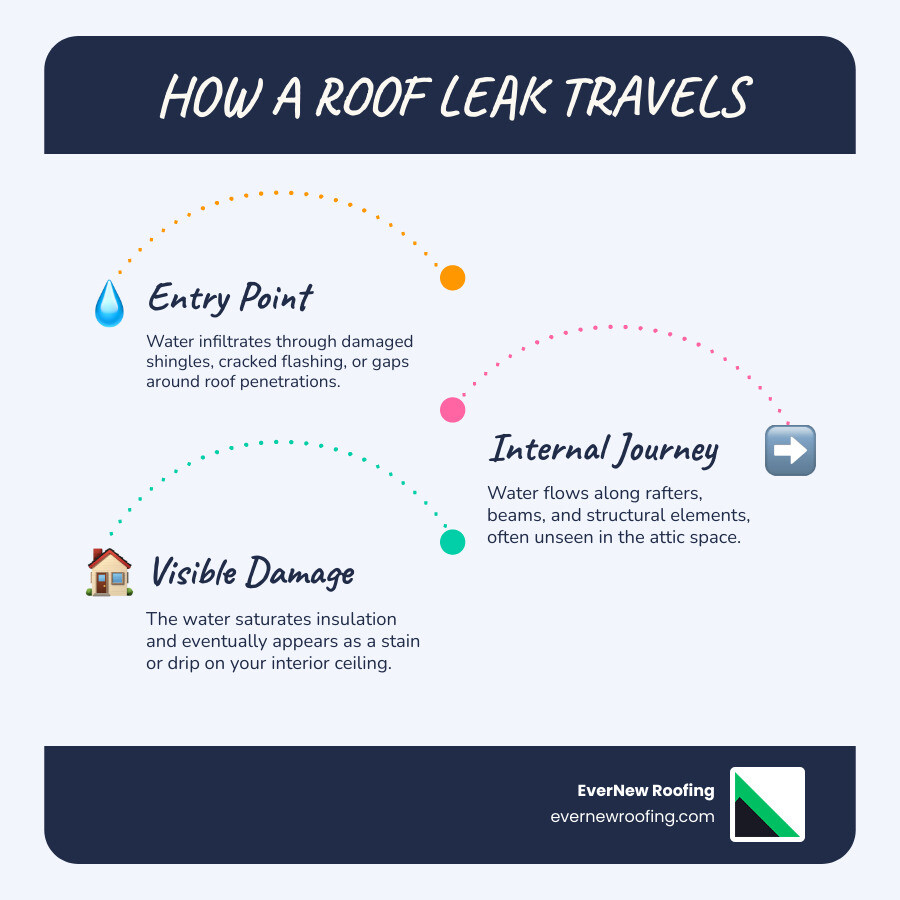
The key to fixing a roof leak is accurate identification. Water stains, musty odors, or visible shingle damage are all signs your roof is compromised.
Ignoring a leak leads to serious consequences. Water intrusion creates a breeding ground for mold and mildew, which can pose health risks like breathing in mold and mildew and causing respiratory issues. Unchecked leaks also lead to wood rot, compromising your home’s structural integrity. If you can’t find the leak or the damage seems extensive, a professional roofing inspection service can provide clarity.
Common Causes of Roof Leaks
Understanding these common culprits can help you narrow down your search:
- Aged Materials: Shingles, sealants, and flashing deteriorate over time, leading to cracks and granule loss.
- Storm Damage: High winds, hail, or falling branches can lift, tear, or puncture roofing materials.
- Damaged Flashing: The metal strips around chimneys, vents, and skylights can become loose, rusted, or cracked.
- Clogged Gutters: Blocked gutters cause water to back up and seep under shingles, a major cause of leaks and ice dams in Michigan.
- Cracked Vent Boots: The rubber boots sealing pipes on your roof can dry out and crack over time.
- Chimney Issues: Leaks can occur through cracks in the chimney crown, deteriorated mortar, or damaged flashing.
- Ice Dams: Common in Michigan, ice dams form when melting snow refreezes at the eaves, forcing water back under shingles.
How to Pinpoint the Exact Leak Location
Finding the entry point can be tricky, as water often travels from where it enters.
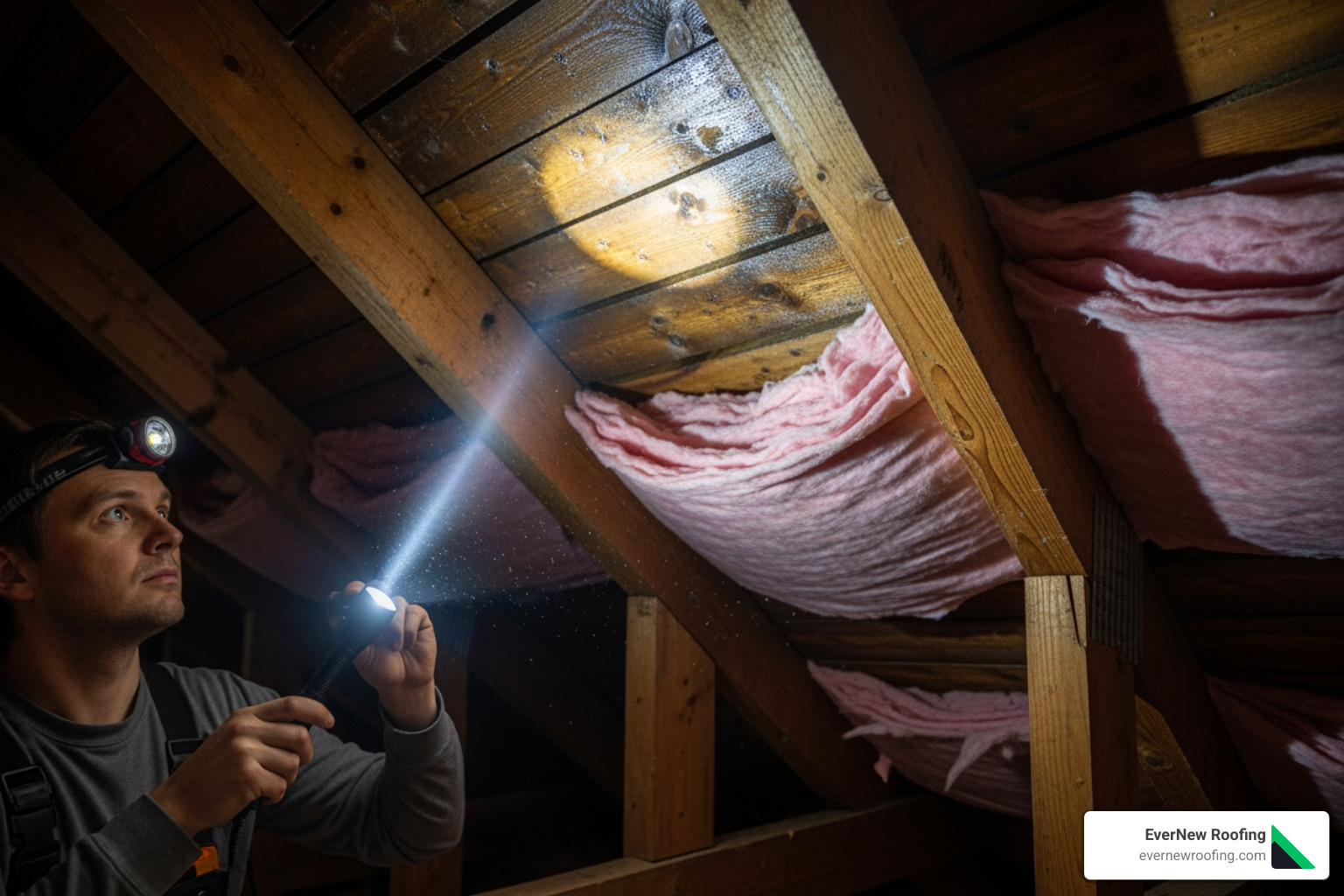
Here’s a step-by-step approach:
- Start in the Attic: With a flashlight, look for water stains, dark wood, or mold on the underside of the roof decking and insulation, especially around vents, chimneys, and skylights.
- Follow the Stains Uphill: Water flows downward. Trace any stains on joists or decking upward to find the higher entry point.
- Check for “Shiners”: Look for nails that missed the framing. Condensation can form on these and drip, mimicking a leak. Clip them flush to the decking.
- The Garden Hose Test (with a Helper): On a dry day, have a helper inside while you spray the roof with a hose.
- Start low, just above the interior leak spot, and soak one small area at a time.
- Have your helper signal you as soon as a drip appears.
- If no drip, move methodically up the roof until the leak is found. This is effective for finding issues around flashing and vents.
- Inspect the Exterior: Once you have a general location, go on the roof to look for missing or damaged shingles and loose or rusted flashing, especially around vent boots.
Your DIY Guide on How to Fix a Leaking Roof
For small, isolated leaks, a DIY repair can save money, with costs ranging from $10 to $120. DIY is best for visible issues like a single missing shingle, a small crack in sealant, or a worn vent boot. These are often temporary fixes. Always work on a dry, calm day for safety and use quality materials for the best results.
Essential Tools and Materials for a DIY Fix
Having the right gear is half the battle when learning how to fix a leaking roof.
- Safety Gear: Sturdy extension ladder, non-slip shoes, work gloves, eye goggles, and a roofing harness (highly recommended).
- Basic Hand Tools: Pry bar, hammer, utility knife, caulk gun, and a trowel or putty knife.
- Materials: Roofing sealant/cement, replacement shingles, replacement flashing, galvanized roofing nails, and a tarp for emergencies.
Basic Steps for How to Fix a Leaking Roof
Once you have your gear and are safely on the roof, you can tackle these common repairs.
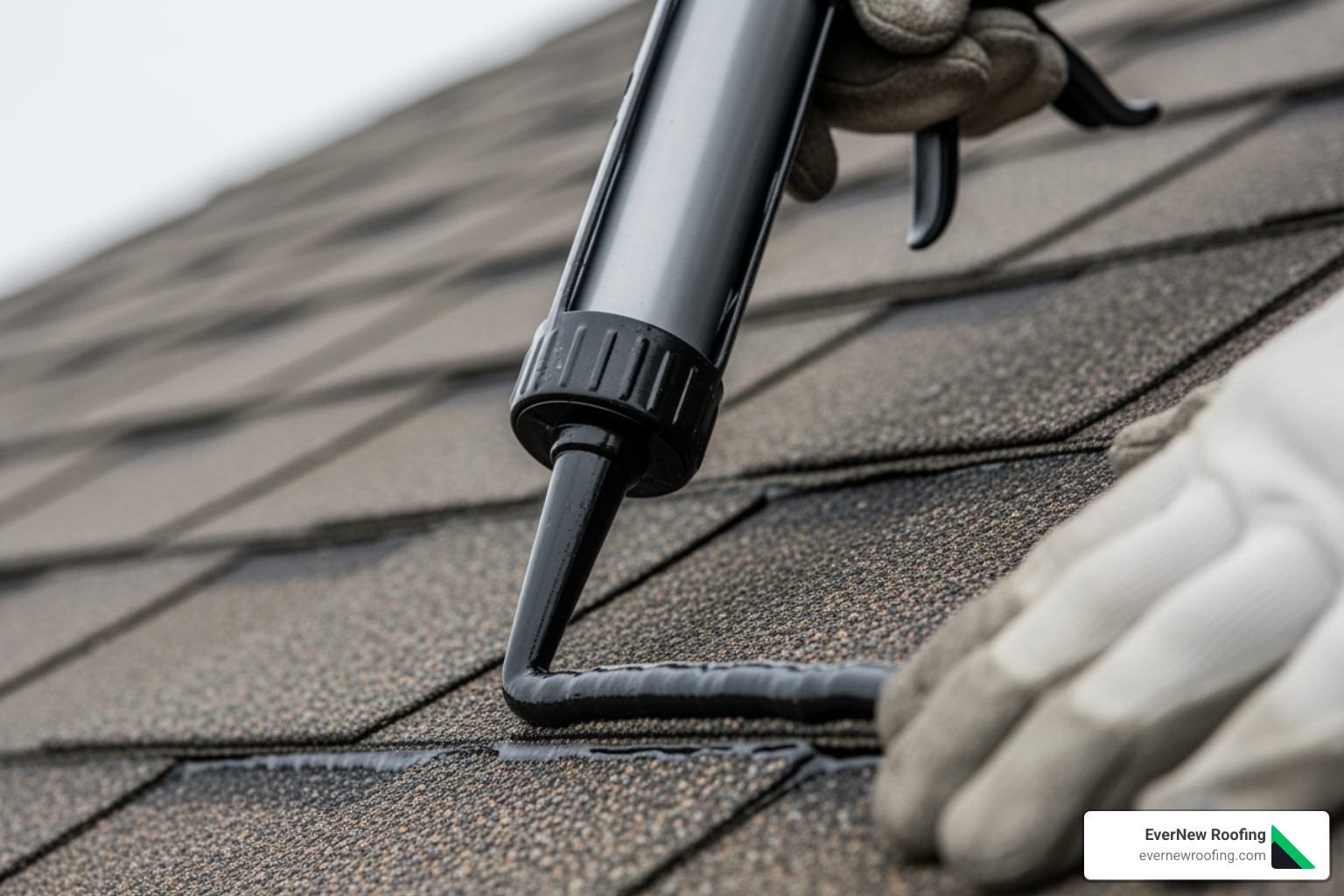
- Replacing Damaged or Missing Shingles:
- Use a pry bar to lift the shingle above the damaged one.
- Remove the nails holding the old shingle and slide it out.
- Slide the new shingle into place, aligning it with the others.
- Secure the new shingle with four roofing nails, placing them just under the edge of the overlapping shingle.
- Apply roofing cement over each nail head for a watertight seal.
- Sealing Curled Shingles:
- On a warm day (or after gently warming the shingle with a blow dryer), flatten the curl.
- Apply a bead of roofing sealant under the curled edges.
- Press the shingle down firmly and place a weight on it for a few hours to bond.
- Patching Small Holes or Cracks:
- For small punctures or cracks, clean the area thoroughly.
- Apply roofing cement over the hole with a putty knife. For a more durable repair, cover the hole with a small piece of metal flashing before applying cement.
How to Fix a Leaking Roof Around Vents and Chimneys
These penetrations are common leak points.
- Plumbing Vent Leaks:
- Inspect the Vent Boot: The rubber gasket (rain collar) around the pipe often cracks or tears.
- Repair/Replace the Collar: If the collar is cracked, you can slip a new one over the old one. Clean the area, slide the new collar down, and apply a waterproof sealant around the top edge.
- Seal the Base: If the leak is at the base of the boot, lift the surrounding shingles, apply sealant around the base’s perimeter, and press the shingles back down.
- Replace the Boot: For severe damage, the entire boot must be replaced. This involves prying up shingles, removing the old boot, and installing a new one, sealing all nail holes and edges.
- Roof Vent Leaks:
- If a plastic vent housing is cracked or a metal vent’s seams have failed, it should be replaced. Pry up the surrounding shingles, remove the old vent, install the new one, and seal all edges and nails with roofing cement.
- Chimney Leaks:
- Chimney Crown: Seal cracks in the concrete crown with a flexible, waterproof sealant.
- Flashing: Clean out old caulk from gaps in the flashing and apply fresh roofing cement. If the metal is rusted or damaged, it needs replacement—a job often best for pros.
- Mortar Joints: Deteriorated mortar joints may need repointing to prevent water intrusion.
For more complex repairs, or if you’re unsure about these tasks, our team offers a full range of roof repair services throughout Southeast Michigan.
DIY Repair vs. Calling a Professional: Making the Right Choice
Deciding whether to DIY or call a professional involves weighing cost, complexity, and safety. While saving money is tempting, an incorrect repair can lead to bigger problems.
| Feature | DIY Roof Repair | Professional Roof Repair |
|---|---|---|
| Cost | Low (materials only, $10-$120 for small fixes) | Moderate to High ($360-$1,550 for minor, $1,000-$5,000+ for extensive) |
| Time | Can take longer, depends on experience | Efficient, quicker completion |
| Safety | High risk of injury (falls, accidents) | Professionals are trained and equipped for safe roof work |
| Warranty | Can void existing roof warranties; no repair warranty | Repair work often comes with a warranty |
| Skill Level | Requires basic handy skills, comfort with heights | Specialized expertise and knowledge of codes |
| Risk of Further Damage | High if done incorrectly | Low if reputable professional is hired |
| Tools/Materials | Purchase or rent tools, select materials | Contractors have all necessary tools and quality materials |
| Insurance Claims | May complicate claims if repairs are substandard | Professionals can assist with documentation for claims |
Pros and Cons of DIY Roof Repairs
Pros:
- Cost Savings: The main benefit is saving on labor costs.
- Control Over Timeline: You can perform the repair on your own schedule.
- Immediate Action: You can address a small leak quickly to prevent further damage.
Cons:
- Safety Risks: Working on a roof is dangerous; falls can cause serious injury.
- Incorrect Repair: A poor fix can fail, worsen the problem, and lead to costlier repairs later.
- Voiding Warranties: DIY repairs can void your roof’s material or installation warranty.
- Lack of Expertise: You may not have the tools or experience to diagnose the true source of a complex leak.
When to Call for Professional Help
While DIY is fine for small jobs, calling a professional is essential in these situations:
- Extensive Damage: Multiple missing shingles, large punctures, or significant water damage in the attic.
- Structural Issues: Any sagging in the roof deck or rafters requires a professional assessment.
- Steep or High Roof: For safety, leave difficult-to-access roofs to the pros.
- Unsure of the Leak Source: If you can’t find the leak, a professional has the experience and tools to locate it.
- Recurrent Problems: Constant patching suggests a systemic issue that needs a comprehensive solution.
- Complex Roof Features: Valleys, skylights, and dormers require specialized knowledge.
For reliable assistance with roof repairs in Southeast Michigan, including emergency services, don’t hesitate to contact us. We’re here to help you find reliable help for roof repair near you.
Beyond the Patch: When to Repair, Refresh, or Replace Your Roof
Sometimes a patch isn’t enough. A leak can be a sign that your roof is nearing the end of its life. An asphalt shingle roof typically lasts 20 to 40 years, but recurrent leaks, widespread granule loss, or sagging are signs that a larger solution is needed. Knowing when to repair, replace, or refresh is key to protecting your investment. For more details, see our guide on key signs you need roof replacement without delay.
Repair vs. Replacement: Key Indicators
Here’s how to know if your roof needs more than a simple fix:
- Widespread Shingle Damage: Large sections of missing, cracked, or damaged shingles indicate a failing system.
- Granule Loss: Excessive granules in your gutters mean your shingles are deteriorating.
- Sagging Areas: A dip in your roofline is a serious sign of structural rot or damage and requires immediate professional attention.
- Roof Age: If your asphalt roof is over 20 years old, it’s nearing the end of its functional life and is more prone to leaks.
- Cost of Repairs: If frequent repair costs are adding up, they may exceed the cost of a new roof. A comprehensive roof replacement guide can help you weigh the options.
The Middle Ground: Roof Rejuvenation
What if your roof isn’t ready for replacement, but repairs are becoming too frequent? Roof rejuvenation is a cost-effective alternative.
This innovative treatment restores the natural oils that asphalt shingles lose over time, which makes them brittle. By replenishing these oils, the treatment improves the flexibility and durability of your existing shingles.
This process can extend your roof’s life by up to 15 years, saving you up to 80% compared to a full replacement. It’s an excellent option for roofs that are aging but still structurally sound, revitalizing the entire surface to resist future leaks. Learn more about what is roof rejuvenation and why your roof needs it.
Safety First and Future-Proofing: Essential Precautions and Maintenance
Roof safety is your top priority. Working at heights is risky, and a slip can cause serious injury. Beyond repairs, proactive maintenance is the best way to prevent future leaks and extend your roof’s life. For more ideas, see our affordable roof maintenance tips.
Critical Safety Precautions for Working on a Roof
- Proper Gear: Always wear non-slip, rubber-soled shoes, gloves, and eye protection.
- Use a Harness: For any pitched roof, a Personal Fall Arrest System (PFAS) or roofing harness is a crucial safety investment.
- Ladder Stability: Your ladder should extend three feet above the roof edge, be on level ground, and be held by a spotter.
- Never Work Alone: Always have a partner present in case of an emergency.
- Weather Awareness: Only work on a dry, calm day. Wet roofs are slippery, and wind is hazardous.
- Avoid Power Lines: Be aware of overhead power lines and keep yourself and your tools at a safe distance.
- Minimize Walking: Walk as little as possible on the roof to avoid damaging shingles.
How to Prevent Future Roof Leaks
Regular maintenance can dramatically reduce the chance of leaks.
- Regular Inspections: Inspect your roof twice a year (spring and fall) and after severe storms. Look for damaged shingles, flashing, and debris.
- Gutter Maintenance: Keep gutters clean to ensure proper drainage and prevent water from backing up under shingles, which can cause ice dams in Southeast Michigan.
- Trim Overhanging Branches: Cut back branches to prevent debris accumulation and damage from falling limbs.
- Ensure Proper Attic Ventilation: Good airflow helps regulate temperature and moisture, preventing condensation and ice dams.
- Manage Snow and Ice: In heavy snowfall, carefully remove snow to prevent destructive ice dams. Consider professional services if you’re not comfortable doing this yourself.
Frequently Asked Questions about Fixing Roof Leaks
Can I fix a roof leak from the inside?
Interior patches with roofing tape or sealant are only temporary. They don’t solve the exterior problem and can allow hidden water damage, mold, and rot to continue. A permanent fix must be done from the outside at the source of the leak.
How much does it cost to fix a leaking roof?
Costs vary based on the damage and who does the work:
- DIY Repairs: Simple fixes typically cost $10 to $120 for materials.
- Professional Repairs: Minor repairs range from $360 to $1,550, while more extensive work can cost $1,000 to $5,000+. The average professional repair is around $750, and many contractors have a minimum service fee.
Is it an emergency if my roof is leaking?
Yes, any roof leak is an emergency. A small drip can quickly lead to major water damage, dangerous mold growth, rotted structural wood, and electrical hazards. Act quickly to prevent a minor issue from becoming a costly disaster.
Conclusion
Successfully handling a roof leak—whether it’s a small drip or a more significant issue—boils down to a few key principles: prompt identification, accurate location, and appropriate action. We’ve walked through the common causes, detailed how to pinpoint that elusive leak, and provided a guide on how to fix a leaking roof for various scenarios. Remember the importance of safety when working at heights and the value of regular maintenance to prevent future problems.
While many minor leaks can be tackled with a DIY approach, knowing your limits and when to call in the professionals is paramount. For complex issues, extensive damage, or if you simply prefer peace of mind, the experts at EverNew Roofing are here to assist. We specialize in effective, long-lasting roof repairs and innovative roof rejuvenation services designed to protect your investment and extend your roof’s life, serving homeowners across Southeast Michigan. For immediate concerns or if you need help from an emergency roofing repair company, don’t hesitate to reach out to us. We’re ready to provide reliable solutions and ensure your home remains safe and dry.