

Why Understanding Repair of Roofing Matters for Every Homeowner
Repair of roofing is a critical maintenance task for protecting your home’s value and safety. Addressing issues promptly, whether it’s a minor leak or major storm damage, can save you thousands of dollars. While the average repair costs around $1,147, minor fixes can be as low as $150, and major structural work can exceed $7,000. Delaying repairs can lead to mold, structural damage, and spiraling costs.
Your roof endures constant wear from sun, rain, and wind. Many problems, however, stem from incorrect installation, making the choice of contractor as important as identifying the issue. The key is to catch problems early through regular inspections, know when to DIY versus calling a pro, and act fast.
As your guide from EverNew Roofing, we aim to empower you with the knowledge to protect your home’s most valuable asset. We specialize in helping homeowners understand all their options for repair of roofing.
Your First Line of Defense: Identifying Roof Problems Early
Your roof protects everything you love, but it needs regular check-ups. Catching roof problems early is your secret weapon against expensive surprises. Most issues start small, but if left unchecked, they can snowball into major headaches. A quick inspection twice a year, in spring and fall, can turn a potential $5,000 disaster into a simple $200 repair. Here’s what to watch for, both inside and out.

Telltale Signs Inside Your Home
Your roof often sends its first warnings from inside. Keep an eye out for these red flags:
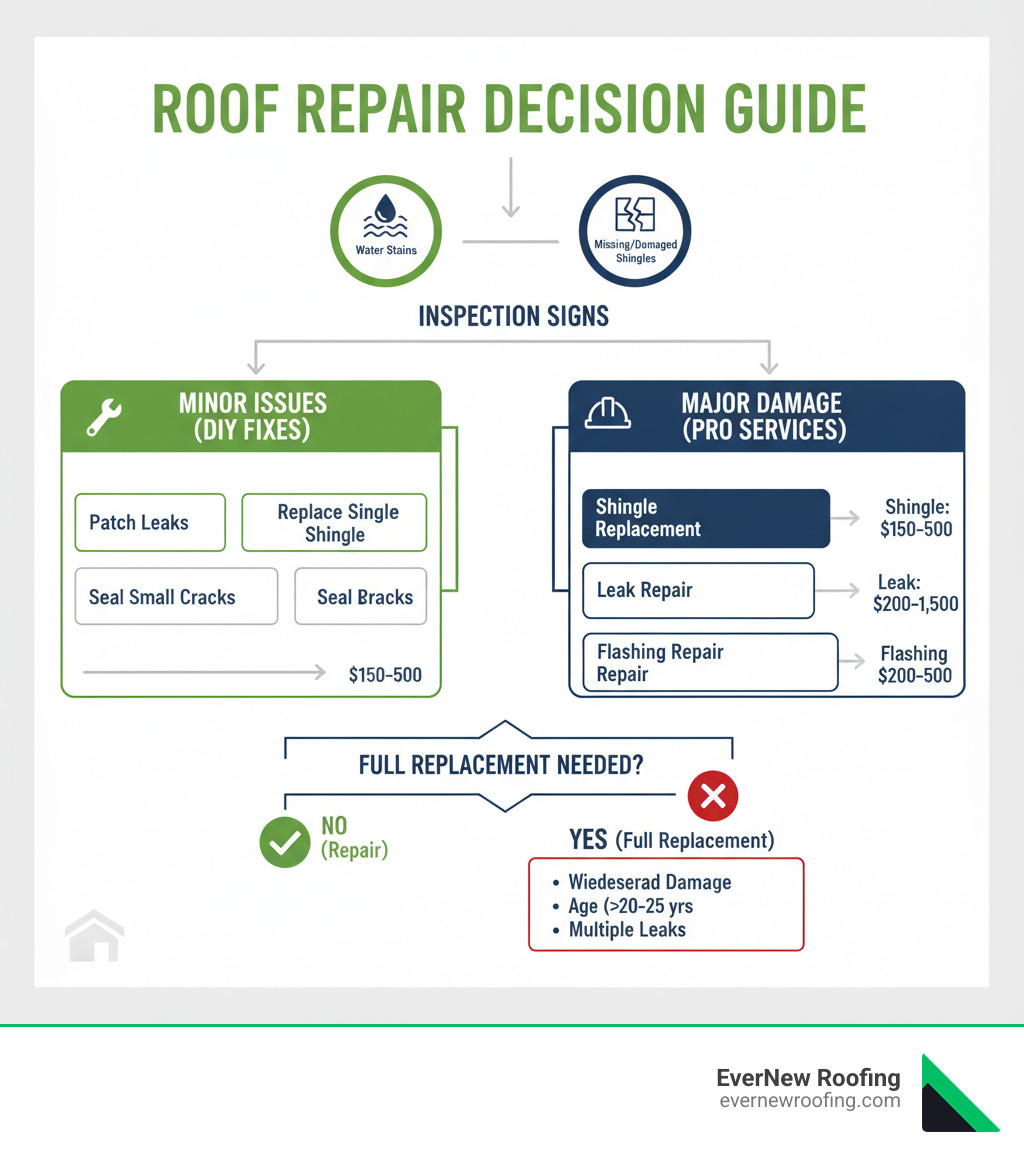
- Water Stains: Brownish discoloration on ceilings or walls, especially after rain, is a clear sign of a leak. The stain’s location may not be directly under the roof defect, as water can travel along structural elements.
- Peeling Paint: Moisture seeping in from above can cause paint or wallpaper to bubble and peel, particularly where the ceiling meets the wall.
- Attic Issues: Check your attic for damp insulation, water spots, or a musty smell. Condensation on exposed nail tips is another sign of excess moisture.
- Sudden Spike in Energy Bills: A compromised roof affects insulation and ventilation, forcing your HVAC system to work harder and driving up energy costs.
If you spot these signs, it’s time for a closer look. For more details, see our guide on professional roofing inspections and what homeowners should expect.
What to Look for on the Outside
A walk around your property with binoculars can reveal problems before they get inside. Here’s what to spot:
- Curling or Blistering Shingles: Shingles that are no longer flat can’t shed water effectively and are a common sign of aging or weather damage.
- Missing or Cracked Shingles: Obvious dark patches or visible cracks create vulnerable spots where water can penetrate. This is common after high winds.
- Excessive Granule Loss: Finding piles of coarse, sand-like granules in your gutters means your shingles are losing their protective layer and aging.
- Damaged Roof Flashing: Flashing is the metal that seals joints around chimneys, vents, and skylights. If it’s bent, rusted, or loose, it’s a prime entry point for water. Many repair of roofing calls are due to flashing failure.
- Sagging Roof Areas: A visible dip in your roofline is a serious red flag for structural trouble, such as rotted decking or weakened rafters. This requires immediate professional attention.
- Debris in Valleys and Pooling Water: Leaves and branches can clog roof valleys, causing water to back up under shingles. On flat roofs, any water that stands for more than 48 hours indicates a drainage problem.
Don’t wait when you spot these warning signs. Addressing them quickly prevents minor repair of roofing needs from becoming major projects.
DIY vs. Pro: Common Roof Repairs You Can (and Can’t) Handle
While DIY home repair is satisfying, repair of roofing involves serious risks. Working at heights on potentially slippery surfaces can be dangerous, and improper repairs can void warranties or create new leaks, turning a small fix into a costly nightmare. However, a handy homeowner can safely tackle a few minor tasks, provided they know their limits.
How to Fix Curled or Cracked Shingles
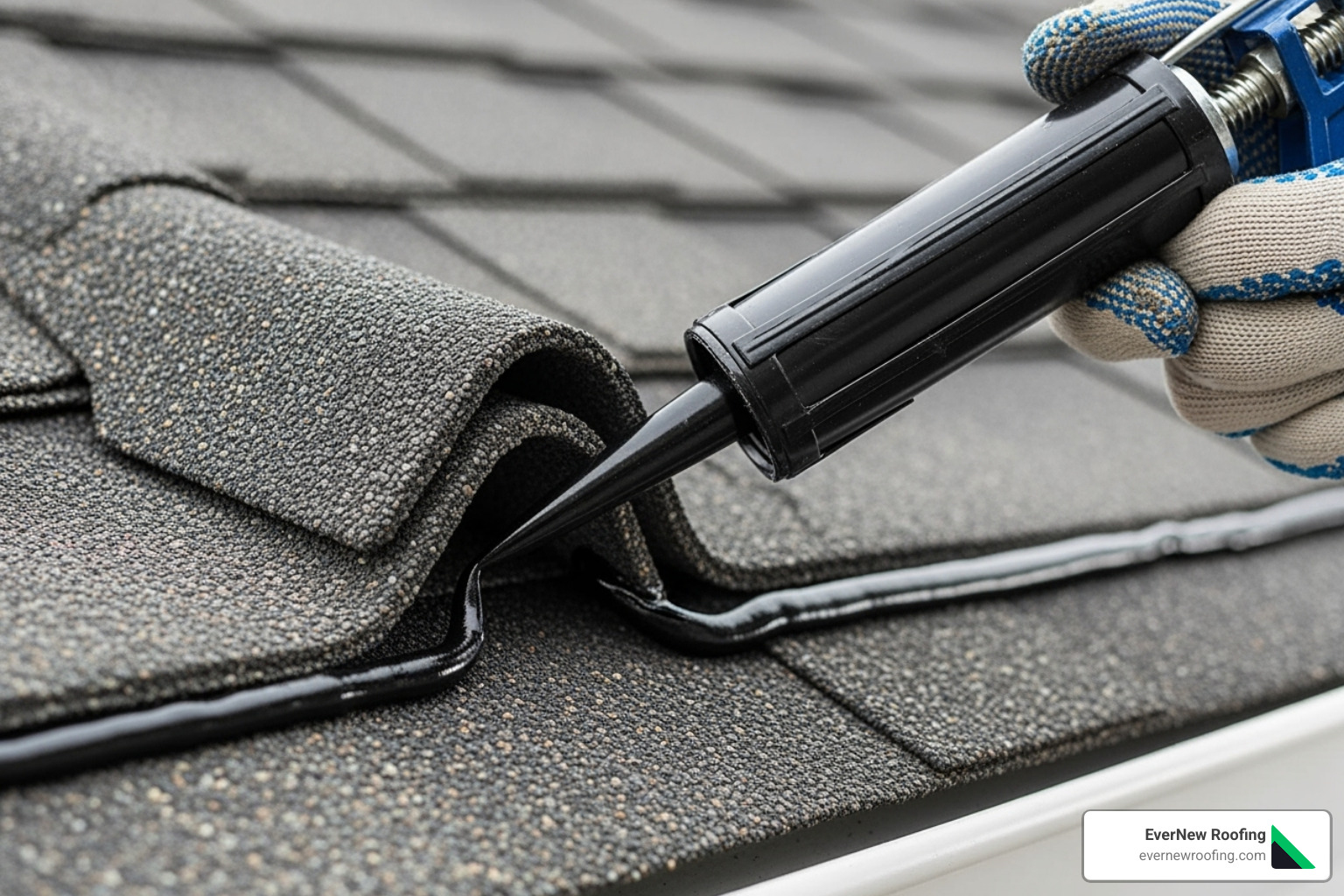
For a few isolated curled or cracked shingles on an accessible roof, a DIY fix is possible. On a warm day, gently lift the curled shingle, clean underneath, and apply a bead of roofing sealant. Press it down firmly and place a brick on top for 24 hours to help it cure. For a crack, apply sealant underneath the shingle, press it down, and then apply another bead over the top of the crack, smoothing it with a putty knife. For better camouflage, you can sprinkle loose asphalt granules from your gutters onto the wet sealant.
A Step-by-Step Guide to Replacing Damaged Shingles
Replacing a damaged shingle is more complex but manageable for a confident DIYer if the damage is limited. You’ll need a pry bar, hammer, utility knife, roofing nails, and matching replacement shingles.
- Remove the Old Shingle: Gently use a pry bar to break the seal of the shingles above the damaged one. Pry out the nails holding the damaged shingle in place and slide it out.
- Inspect the Decking: Look at the wood underneath. If it’s soft or rotted, stop and call a professional. This indicates a larger water damage issue.
- Install the New Shingle: Slide the new shingle into place, aligning it with the others. Secure it with four roofing nails, placed so the shingle above will cover the nail heads.
- Seal It: Apply roofing cement under the tabs of the new shingle and any others you lifted to ensure a watertight seal.
For more detailed instructions, consult a detailed guide on replacing shingles.
When to Leave It to the Professionals
Your safety and your home’s integrity are paramount. Call a licensed roofing contractor for these situations:
- Widespread Damage: If more than 30% of your roof is damaged, you’re likely looking at a replacement, not a repair.
- Structural Issues: A sagging roof indicates a failure in the underlying structure and is a no-go zone for DIY. This is a serious safety hazard.
- Major Leaks: If you have active leaks or significant water staining, there’s likely hidden damage to the decking, insulation, or framing that requires a professional assessment.
- Steep Roofs: Roofs with a steep pitch (over an 8/12 slope) require specialized safety equipment and training.
- Complex Flashing Repairs: Flashing around chimneys, skylights, and vents are common leak points and require expert installation to be effective.
- Aging Roof: If your roof is near the end of its lifespan (15-30 years for asphalt) and needs frequent repairs, you may be throwing good money after bad. A pro can help you decide if replacement is the smarter financial move.
If you’re ever unsure or uncomfortable, don’t risk it. Find trusted roofing services near you to get an expert opinion.
Understanding the Costs and Factors of Professional Repair of Roofing
When budgeting for repair of roofing, it helps to know the typical costs. Most repairs are far more affordable than a full replacement. The national average for a roof repair is about $1,147, with most projects falling between $392 and $1,913. That labor typically accounts for 60% or more of the final bill.
Here’s a general breakdown of what different repairs might cost:
| Type of Roof Repair | Typical Cost Range |
|---|---|
| Minor Repairs | $150–$1,000 |
| Moderate Repairs | $1,001–$2,000 |
| Major Repairs | $2,001–$8,000 |
| Shingle Replacement (few) | $50–$800 |
| Leak Repair (small) | $200–$1,000 |
| Flashing Repair (chimney) | $200–$500 |
| Sagging Roof Repair | $1,500–$7,000 |
| Roof Framing Repair | $500–$5,000 |
Depending on the scope of work, you may also need a permit, which can cost $75 to $250. A professional inspection might run from $100 to $600, but it’s a worthwhile investment to diagnose problems accurately.
Key Factors That Influence Repair Costs
Several variables affect the final price of a roof repair:
- Roofing Material: Asphalt shingles are the most affordable to repair ($4.25 – $8.25 per sq. ft.), while materials like slate or metal require specialized skills and are more expensive ($12 – $22 per sq. ft. for slate).
- Extent of Damage: Patching a few shingles is cheap. Widespread damage or issues that have compromised the underlying decking will cost significantly more.
- Roof Accessibility and Pitch: A steep or complex roof requires more time and safety equipment, which can add $1,000 to $3,000 to labor costs.
- Geographic Location: Labor rates and material costs vary by region.
For more details, see our guide on what affects roof replacement costs.
The Financial Consequences of Delaying the repair of roofing
Putting off repair of roofing is almost always a costly mistake. A small problem can quickly escalate, leading to severe consequences:
- Structural Damage: An unaddressed leak can rot roof decking, rafters, and ceiling joists, turning a $200 fix into a $5,000 structural nightmare.
- Mold and Mildew: Persistent moisture creates a breeding ground for mold, which poses health risks and requires expensive remediation.
- Higher Energy Bills: Wet insulation loses its effectiveness, forcing your HVAC system to work harder and increasing your utility costs.
- Reduced Home Value: A visibly damaged roof is a major red flag for potential buyers, significantly hurting your property’s value.
The bottom line is to address roof damage as soon as you notice it. A proactive approach protects your home and saves you money.
Repair, Replace, or Refresh? Making the Smartest Choice for Your Roof
Deciding between repairing, replacing, or refreshing your roof involves weighing its age, the extent of damage, and your budget. Each option has its place, and making the right choice is key to effective repair of roofing.
When to Choose Repair Over Replacement
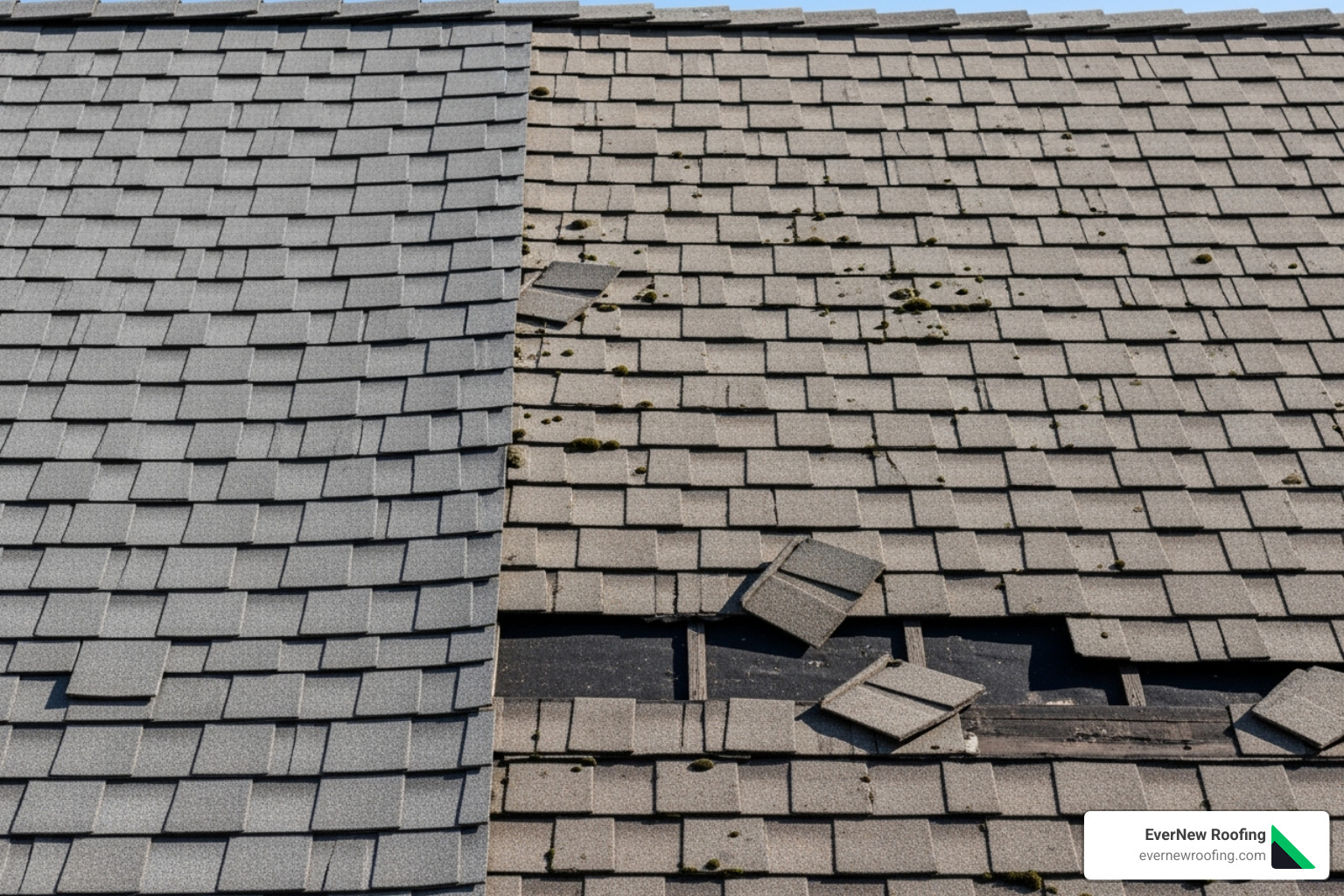
A targeted repair is often the most sensible solution in these cases:
- Your roof is relatively young (under 15 years old).
- Damage is localized to a small, specific area.
- Your budget is tight, and a repair can buy you time.
- The rest of the roof is in good condition, as confirmed by an inspection.
Timely repairs can significantly extend your roof’s life. Find more tips in our guide to Affordable roof maintenance tips.
Key Signs You Need a Full Roof Replacement
Sometimes, a replacement is the only responsible long-term option. Look for these signs:
- Your roof is past its average lifespan (typically 15-30 years for asphalt shingles). Learn more about roof lifespans here: 30 years The average lifespan of a roof is30 years.
- Widespread shingle damage, such as curling, cracking, or granule loss across large areas.
- Extensive or multiple leaks, indicating a systemic failure.
- A sagging roof deck, which signals a serious structural problem.
- You need frequent repairs, and the cumulative cost is approaching that of a replacement.
A Cost-Effective Alternative: What is Roof Rejuvenation?
For asphalt shingle roofs showing signs of age but still structurally sound, there’s a third option: roof rejuvenation. This is our specialty at EverNew Roofing. As shingles age, they lose essential oils and become brittle. Our treatment restores these oils, reversing the aging process.
The benefits are significant:
- Extends Roof Life: Adds years of life to your asphalt shingles.
- Restores Flexibility: Makes shingles more resistant to cracking and storm damage.
- Saves Money: Costs up to 80% less than a full roof replacement.
- Eco-Friendly: Reduces landfill waste by keeping your current roof in service longer.
Roof rejuvenation is a smart, budget-friendly alternative to a premature replacement. Learn more about The benefits of roof rejuvenation to see if it’s right for you.
Navigating Roof Emergencies and Finding a Reliable Contractor
A roof emergency is stressful, but a clear plan can minimize damage. Equally critical is finding a trustworthy contractor for any repair of roofing, as the right choice ensures quality work while the wrong one can lead to disaster.
What to Do in an Emergency Roofing Repair Situation
When your roof is severely damaged, act quickly:
- Prioritize Safety: If there’s any risk of collapse or electrical hazards, evacuate immediately. Never get on a roof during a storm or if it appears unstable.
- Limit Interior Damage: Use buckets and plastic sheeting to catch water. If water is near outlets, turn off power at the breaker box.
- Document Everything: Take photos and videos of all damage, inside and out, for your insurance claim.
- Call a Professional: Contact a licensed, insured roofing company that offers 24/7 emergency services. They can safely apply temporary protection, like a tarp, to prevent further water intrusion. For more information, see this guide on post-storm repairs.
- Contact Your Insurer: Report the damage to your insurance company as soon as possible to start the claims process.
How to Find and Choose a Trusted Roofing Contractor
Choosing the right contractor is the most important step. Here’s how to vet them:
- Verify License and Insurance: This is non-negotiable. Ask for proof of both general liability and workers’ compensation insurance to protect yourself from liability.
- Check Reviews and References: Look for consistently positive feedback on Google and the BBB. Ask for local references you can call to inquire about their experience.
- Get Multiple Written Estimates: Obtain at least three detailed quotes. Be wary of any bid that is significantly lower than the others, as it may signal shortcuts or inferior materials.
- Understand the Warranty: Ask about warranties on both materials and workmanship. A strong labor warranty shows the contractor stands behind their work.
Before hiring, ask key questions about their experience, process for handling unexpected issues, and cleanup procedures. For more tips, visit our guide on finding trusted roofing services near you.
Understanding Financing Options for Major repair of roofing
A major repair of roofing is a significant expense, but several financing options can make it manageable:
- Home Equity Loans/HELOCs: Borrow against your home’s equity, often at competitive rates.
- Personal Loans: Unsecured loans that offer fast funding but may have higher interest rates.
- FHA Title I Loans: Government-backed loans designed for home improvements, often with flexible credit requirements.
- Contractor Financing: Many roofing companies, including EverNew Roofing, offer direct financing options.
- Insurance Coverage: If the damage is from a covered event like a storm, your insurance may cover most or all of the cost.
Don’t delay necessary repairs due to cost. Smart financing protects your home now and prevents more expensive damage later.
Protect Your Investment for Years to Come
Your roof is your home’s primary shield. Protecting it means embracing proactive maintenance, scheduling regular inspections, and handling repair of roofing promptly. By understanding what to look for and when to call in experts, you protect your family’s safety and your financial well-being.
We’ve covered how to spot warning signs, what you can fix yourself, and when to call a pro. We’ve also explored the choice between repair, replacement, and a smart middle ground: roof rejuvenation.
This is where EverNew Roofing shines. If your asphalt shingle roof is aging, our rejuvenation service can restore its flexibility and durability, adding years of life for up to 80% less than a full replacement. It’s a cost-effective, eco-friendly solution that gives you peace of mind.
We make the process easy with instant online quotes and certified professionals. We proudly serve homeowners across Southeast Michigan, including Lenawee, Livingston, Macomb, Monroe, Oakland, St Clair, Washtenaw, and Wayne Counties.
Don’t wait for a small problem to become a catastrophe. Address issues early to ensure your roof remains a strong, reliable shield for your home.
Ready to take the next step? Learn more about your options, including a full roof replacement.

